Ballon d’Or Winners Ranked: Players with the Most Awards
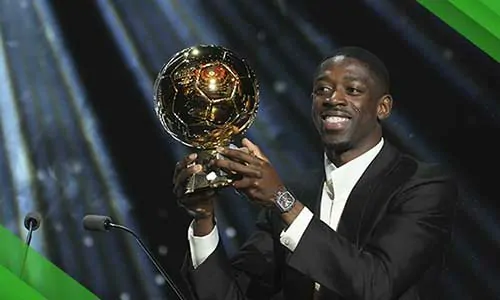
For over six decades, the Ballon d’Or has stood as the ultimate symbol of individual excellence in world football. Presented annually by France Football, this prestigious Golden Ball has been hoisted by the sport’s most iconic figures, creating a rich history of legendary triumphs. When looking at the Ballon d’Or winners ranked, the list represents a timeline of football’s golden eras. This comprehensive guide details the legendary figures who have claimed the award multiple times, showcasing the ultimate elite. Let’s delve deep into the Ballon d’Or winners ranked to see who sits on the throne of football royalty.
Table of Contents
- The History and Evolution of the Ballon d’Or
- Ballon d’Or Winners Ranked: The Ultimate Leaderboard
- The Elite Tier: Players with Three or More Awards
- The Double Winners: Legends with Two Ballon d’Ors
- The Transition to a New Era: 2022 to 2025
- Analysing the Ballon d’Or Winners Ranked by Club Success
- The Evolution of Ballon d’Or Winners Ranked Internationally
- Frequently Asked Questions (FAQ)
- Conclusion and Next Steps
The History and Evolution of the Ballon d’Or
Established in 1956 by the respected writer Gabriel Hanot, the Ballon d’Or was originally designed to honour the best European footballer playing in Europe. Legendary English winger Sir Stanley Matthews was the inaugural recipient, setting a high standard of professional longevity. Consequently, for the first few decades of its existence, global superstars like Pelé and Diego Maradona were ineligible to lift the trophy. This historical context is vital when analyzing the list of the global elite.
In 1995, the eligibility rules underwent a major transformation, allowing non-European players active in European leagues to win. AC Milan’s Liberian icon George Weah made history by claiming the award in the very same year. Furthermore, in 2007, the award expanded its scope to become fully global, opening the nomination list to any player active across the world. Today, the voting panel consists of specialized international journalists who assess performances on a seasonal basis rather than a calendar year.
Recently, UEFA co-organized the gala alongside France Football, adding another layer of prestige. When evaluating the Ballon d’Or winners ranked historically, understanding these structural shifts helps fans contextualize the eras of dominance. It highlights how harder it has become to win, with modern players facing intense, globalized competition every single year.
Ballon d’Or Winners Ranked: The Ultimate Leaderboard
When studying the Ballon d’Or winners ranked throughout football history, a clear hierarchy emerges. Only a select group of exceptional athletes have managed to claim the Golden Ball more than once. Achieving this feat requires not just a single season of brilliance, but years of sustained, world-class consistency at both club and international levels.
Below is the definitive table of the multiple Ballon d’Or winners ranked by their total number of victories. This leaderboard represents the pinnacle of individual footballing achievements.
| Rank | Player | Country | Total Wins | Years Won |
|---|---|---|---|---|
| 1 | Lionel Messi | Argentina | 8 | 2009, 2010, 2011, 2012, 2015, 2019, 2021, 2023 |
| 2 | Cristiano Ronaldo | Portugal | 5 | 2008, 2013, 2014, 2016, 2017 |
| 3 | Michel Platini | France | 3 | 1983, 1984, 1985 |
| 4 | Johan Cruyff | Netherlands | 3 | 1971, 1973, 1974 |
| 5 | Marco van Basten | Netherlands | 3 | 1988, 1989, 1992 |
| 6 | Franz Beckenbauer | Germany | 2 | 1972, 1976 |
| 7 | Ronaldo Nazário | Brazil | 2 | 1997, 2002 |
| 8 | Alfredo Di Stéfano | Spain / Argentina | 2 | 1957, 1959 |
| 9 | Kevin Keegan | England | 2 | 1978, 1979 |
| 10 | Karl-Heinz Rummenigge | Germany | 2 | 1980, 1981 |
This list of the Ballon d’Or winners ranked serves as a testament to those who defied the physical and tactical limitations of their eras. In the following sections, we will explore the careers of these legends, examining what made them stand out from their peers.
The Elite Tier: Players with Three or More Awards
The elite tier consists of players who have dominated entire eras of football. These individuals did not just win trophies; they completely revolutionized the way the game was played, leaving a legacy that remains highly influential today.
Lionel Messi – 8 Ballon d’Or Awards
Lionel Messi remains at the very top of the Ballon d’Or winners ranked list. His journey began in 2009 when he led Pep Guardiola’s iconic Barcelona side to a historic treble. From 2009 to 2012, Messi achieved the unprecedented feat of winning four consecutive awards, culminating in a historic calendar year in 2012 where he scored 91 goals.
Furthermore, his subsequent wins in 2015, 2019, and 2021 showcased his incredible adaptability. He transitioned from a goal-scoring winger to a deep-lying playmaker, maintaining his world-class output. Ultimately, his eighth victory in 2023 was secured after his legendary performance at the 2022 World Cup in Qatar, where he guided Argentina to global glory, cementing his status as one of the greatest to ever play the sport.
Cristiano Ronaldo – 5 Ballon d’Or Awards
Cristiano Ronaldo is second among the Ballon d’Or winners ranked, celebrated for his peerless work ethic and athleticism. Ronaldo claimed his first trophy in 2008 with Manchester United after a sensational double-winning campaign. However, his most dominant period came with Real Madrid, where he engaged in a historic, decade-long rivalry with Messi.
Ronaldo went on to win the award in 2013, 2014, 2016, and 2017. These victories coincided with Real Madrid’s historic run of Champions League trophies, during which Ronaldo consistently finished as the tournament’s top scorer. His transition from an explosive winger to a highly clinical central striker allowed him to remain at the absolute top for over fifteen years.
Michel Platini – 3 Ballon d’Or Awards
For those studying the Ballon d’Or winners ranked, Michel Platini’s consecutive hat-trick of awards in 1983, 1984, and 1985 remains an incredible milestone. The French midfield maestro was the focal point of both Juventus and the France national team. He possessed unmatched passing vision and an extraordinary goal-scoring instinct for a midfielder.
His peak came during the 1984 European Championship, where he scored nine goals in just five matches to lead France to the trophy. Platini’s ability to dictate the tempo of matches and convert crucial free-kicks established him as one of the most complete midfielders in the history of European football.
Johan Cruyff – 3 Ballon d’Or Awards
As we look back at the Ballon d’Or winners ranked historically, Johan Cruyff’s influence on the pitch and in dugout tactics is perhaps the most profound. Cruyff won the award in 1971, 1973, and 1974. He was the chief orchestrator of the legendary Ajax side that won three consecutive European Cups, and he later brought his genius to Barcelona.
Cruyff was the on-pitch pioneer of “Total Football”—a tactical system where outfield players could seamlessly swap positions. His vision, technical ability, and tactical intelligence redefined modern attacking patterns, ensuring his legacy as a true revolutionary of the beautiful game.
Marco van Basten – 3 Ballon d’Or Awards
Marco van Basten was the quintessential modern striker, combining raw physical strength with breathtaking acrobatic technique. He comfortably sits alongside the finest Ballon d’Or winners ranked in football history, claiming the trophy in 1988, 1989, and 1992. He was the spearhead of a dominant AC Milan team and led the Netherlands to Euro 1988 glory.
Tragically, severe ankle injuries forced Van Basten into retirement at the young age of 28. Despite his career being cut short, his peak years were so incredibly dominant that he secured three Golden Balls, leaving fans to wonder how many more he could have won had he stayed healthy.
The Double Winners: Legends with Two Ballon d’Ors
While winning one Ballon d’Or is a monumental achievement, winning a second confirms a player’s place in the pantheon of true legends. These double winners represent different eras, tactical systems, and playing styles.
Franz Beckenbauer – 2 Ballon d’Or Awards
Known as “The Kaiser,” Franz Beckenbauer won the award in 1972 and 1976. He represents a unique defensive benchmark among the Ballon d’Or winners ranked, being one of the very few defensive players to win the trophy multiple times. Beckenbauer practically invented the modern “libero” or sweeper role, stepping out of defense to launch attacks with his superb passing range.
Under his leadership, Bayern Munich won three consecutive European Cups in the 1970s. Additionally, he captained West Germany to victory in the 1974 World Cup. Beckenbauer proved that defenders could match the elegance and influence of the world’s finest attacking players.
Ronaldo Nazário – 2 Ballon d’Or Awards
Ronaldo Nazário, often called “O Fenômeno,” is widely regarded as one of the most explosive and talented strikers in football history. He claimed his first Ballon d’Or in 1997 with Inter Milan at just 21 years old, making him the youngest winner in the history of the award. His combination of sheer power, lightning pace, and step-over dribbles was unstoppable.
Despite suffering two devastating knee injuries that threatened his career, Ronaldo made a miraculous comeback to lead Brazil to World Cup glory in 2002. He finished as the tournament’s top scorer, securing his second Ballon d’Or and completing one of the greatest comeback stories in sports history.
Alfredo Di Stéfano – 2 Ballon d’Or Awards
Alfredo Di Stéfano was the driving force behind the legendary Real Madrid team that won the first five European Cups from 1956 to 1960. He won the Ballon d’Or in 1957 and 1959. Di Stéfano was famous for his incredible work rate, popping up in defense, midfield, and attack during a single match.
In 1989, France Football awarded Di Stéfano the unique “Super Ballon d’Or” to mark their 30th anniversary. This special award, voted on by past winners, solidified his status as the greatest player of his generation, and his name remains highly respected among historians.
Kevin Keegan & Karl-Heinz Rummenigge
During the late 1970s and early 1980s, two explosive forwards dominated the European football landscape. England’s Kevin Keegan won back-to-back awards in 1978 and 1979 while playing for German club Hamburger SV. Keegan’s relentless work rate and tactical flexibility made him a highly dynamic attacking threat.
Immediately following Keegan’s reign, West Germany’s Karl-Heinz Rummenigge claimed consecutive awards in 1980 and 1981. Playing for Bayern Munich, Rummenigge was a powerful forward known for his clinical finishing and outstanding physical strength, leading his club to multiple domestic and European honours.
The Transition to a New Era: 2022 to 2025
As the historic era of Lionel Messi and Cristiano Ronaldo naturally drew to a close, the footballing world witnessed a dramatic shift. New superstars emerged to claim the coveted Golden Ball, reflecting the changing landscape of modern European football.
In 2022, Real Madrid’s Karim Benzema was the runaway winner after a spectacular season. He guided the Spanish giants to a La Liga and Champions League double, scoring crucial knockout-stage hat-tricks. Following this, in 2023, Lionel Messi claimed his eighth award, largely driven by his talismanic World Cup triumph with Argentina in late 2022.
The year 2024 brought a massive shift in how the Ballon d’Or winners ranked lists are curated. Manchester City’s midfield anchor Rodri claimed the 2024 Ballon d’Or, becoming the first player in Manchester City’s history to do so. Rodri was rewarded for his tactical brilliance and stability, helping his club secure another Premier League title and guiding Spain to victory at Euro 2024. This marked the first time a Premier League player won the award since Ronaldo in 2008, highlighting the value of defensive midfielders.
The transition to the new generation was further cemented in 2025 when French winger Ousmane Dembélé claimed his maiden Ballon d’Or. Dembélé enjoyed an extraordinary season with Paris Saint-Germain, leading them to their first-ever UEFA Champions League trophy. Under the guidance of Luis Enrique, Dembélé delivered a phenomenal individual campaign, finishing with 37 goals and 15 assists across all competitions. This keeps the debate over the Ballon d’Or winners ranked highly active, as fresh talent rises to challenge the established order.
Analysing the Ballon d’Or Winners Ranked by Club Success
While the Ballon d’Or is an individual award, the club a player represents plays a massive role in their success. Historically, the world’s biggest clubs have provided the platform, tactical support, and global visibility needed for players to secure the voting panel’s favor.
If we look at the Ballon d’Or winners ranked by club representation, the Spanish giants Real Madrid and Barcelona lead the pack by a significant margin. This dominance is a crucial metric, as it illustrates where the global epicenter of football talent has shifted over different eras.
- Real Madrid (12+ Winners): Famously home to Alfredo Di Stéfano, Raymond Kopa, Luís Figo, Ronaldo Nazário, Fabio Cannavaro, Cristiano Ronaldo, Luka Modrić, and Karim Benzema.
- Barcelona (12+ Winners): Highlighted by Lionel Messi’s record-breaking run, alongside historical greats like Johan Cruyff, Luis Suárez (the elder), Hristo Stoichkov, Rivaldo, and Ronaldinho.
- Juventus (8 Winners): Dominated the 1980s and 1990s with winners like Paolo Rossi, Michel Platini, Roberto Baggio, Zinédine Zidane, and Pavel Nedvěd.
- AC Milan (8 Winners): Powered by the Dutch trio of Ruud Gullit and Marco van Basten, alongside George Weah, Andriy Shevchenko, and Kaká.
- Bayern Munich (5 Winners): Built on the 1970s legends Gerd Müller and Franz Beckenbauer, alongside Karl-Heinz Rummenigge.
In addition, modern shifts have seen clubs like Manchester City enter the winner’s circle through Rodri in 2024, and Paris Saint-Germain securing historic recognition through Ousmane Dembélé’s spectacular run in 2025. These developments suggest a more competitive distribution of talent across European leagues in the years to come.
The Evolution of Ballon d’Or Winners Ranked Internationally
When examining the Ballon d’Or winners ranked by national representation, we notice a fascinating balance between historical systems and individual genius. For decades, European powerhouses dominated the rankings due to the early eligibility rules.
Historically, Germany, Italy, and France have been highly successful. Germany’s success was built on the collective strength of Bayern Munich and Borussia Mönchengladbach in the 1970s, producing winners like Beckenbauer, Müller, and Rummenigge. Similarly, France has enjoyed a rich history of winners from Raymond Kopa to Michel Platini, Zinédine Zidane, Karim Benzema, and Ousmane Dembélé.
However, once eligibility rules were globalized, South American nations quickly climbed the ranks. Argentina stands as a prime example, dominating the modern standings primarily due to Lionel Messi’s historic eight awards. Brazil has also produced iconic winners like Ronaldo Nazário, Rivaldo, Ronaldinho, and Kaká, proving that individual flair and tournament success on the international stage remain highly influential to voters.
This balance of national power keeps the Ballon d’Or highly prestigious. It serves as a source of national pride, where a single player’s victory can unite an entire country in celebration.
Frequently Asked Questions (FAQ)
Q1: Who sits at the top of the Ballon d’Or winners ranked list?
Lionel Messi sits at the top of the ranking with a record-breaking 8 Ballon d’Or awards (won in 2009, 2010, 2011, 2012, 2015, 2019, 2021, and 2023).
Q2: Has any defender ever won multiple Ballon d’Or awards?
Yes, German defensive legend Franz “The Kaiser” Beckenbauer is the only defender to win multiple Ballon d’Or trophies, claiming the award in 1972 and 1976.
Q3: Who won the Ballon d’Or in 2024 and 2025?
Manchester City’s defensive midfielder Rodri won the award in 2024, while Paris Saint-Germain’s explosive winger Ousmane Dembélé claimed his first Ballon d’Or in 2025.
Q4: What is the “Super Ballon d’Or” and who won it?
The Super Ballon d’Or is a unique award presented by France Football in 1989 to celebrate their 30th anniversary. Real Madrid legend Alfredo Di Stéfano is the only player in history to receive this award.
Q5: Who is the youngest player to win the Ballon d’Or?
Brazil’s Ronaldo Nazário is the youngest recipient in history, winning his first Ballon d’Or in 1997 at the age of just 21 years and 95 days.
Q6: Are non-European players eligible to win the Ballon d’Or?
Yes. While initially restricted to European players, the rules were expanded in 1995 to include any player at a European club, and fully globalized in 2007 to include any player active worldwide.
Conclusion and Next Steps
In our comprehensive guide to the Ballon d’Or winners ranked, we have explored the legendary figures who have shaped the history of football. From the early dominance of Johan Cruyff and Michel Platini to the modern, record-breaking era of Lionel Messi and Cristiano Ronaldo, the Golden Ball remains the ultimate individual honor in sports.
As we witness the rise of a new generation featuring stars like Rodri and Ousmane Dembélé, the debate over who will join this elite list of multiple winners continues to captivate football fans worldwide. We keep this list of the Ballon d’Or winners ranked updated as new legends emerge and write their own history on the pitch.
What are your thoughts on the rankings? Do you believe the modern winners deserve their places alongside the icons of the past? Let us know your opinions in the comments section below, and share this article with your fellow football enthusiasts to keep the debate alive! For more historical updates, you can check out the official list of winners on France Football.