Box-to-Box Midfielder Explained: Duties, Skills and Tactical Importance
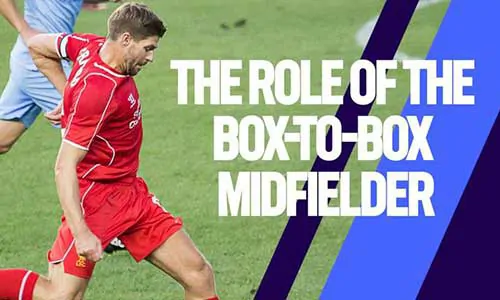
In modern football, tactical flexibility is the cornerstone of success. Among the various positions on the pitch, none demands as much versatility, stamina, and intelligence as the central midfield engine. Consequently, the Box-to-Box Midfielder Explained concept helps us dissect one of the most demanding roles in sports history, outlining how these dynamic players bridge the gap between defense and attack.
Historically referred to as the classic “number 8,” this role requires a unique combination of physical and mental attributes. Therefore, a team possessing a world-class box-to-box midfielder often dominates the tempo of the game, controls transitions, and establishes a robust shield for the defensive line. In this comprehensive guide, we will analyze the precise duties, required skills, and tactical importance of this essential position.
Table of Contents
- What is a Box-to-Box Midfielder?
- Why the Box-to-Box Midfielder Explained Concept Matters Today
- Core Duties of a Box-to-Box Midfielder
- Essential Box-to-Box Midfielder Skills and Attributes
- Tactical Importance in Modern Formations
- Legendary and Modern Examples: Box-to-Box Midfielder Explained through Icons
- How to Train to Become a Box-to-Box Midfielder
- Frequently Asked Questions
What is a Box-to-Box Midfielder?
To define the role simply, a box-to-box midfielder is a central midfielder who is highly influential in both their own penalty box and the opponent’s penalty box. Unlike a specialized defensive midfielder who sits in front of the back four, or a pure playmaker who operates primarily in the final third, this player covers the entire length of the pitch.
The term “box-to-box” literally describes their zone of operation. When looking at the Box-to-Box Midfielder Explained, we see a player who must tackle a striker in their own box, sprint 80 yards, and then arrive late to score at the other end. Therefore, they are the ultimate multi-functional athletes on the pitch.
The Evolution of the Number 8 Midfielder
Over the decades, the role of the central midfielder has evolved significantly. In traditional 4-4-2 formations of the 1980s and 1990s, midfielders were naturally expected to perform box-to-box duties because there were only two of them in the center. However, as modern systems like the 4-3-3 and 4-2-3-1 became dominant, roles became more specialized.
Despite this specialization, the tactical demand for dynamic, versatile central midfielders has resurfaced. Today’s “number 8” is not just a runner; they are highly skilled technical players capable of breaking opponent lines with progressive passes. This analysis of the Box-to-Box Midfielder Explained reveals how modern coaches rely on these players to maintain tactical balance.
Continental Variations of the Role
In addition to the English tradition of the relentless “box-to-box” engine, other football cultures have their own variations of this role. In Italy, this player is often referred to as a mezzala, a player who plays on the side of a central midfield trio and makes overlapping runs into wide half-spaces. In South America, they might be styled as a segundo volante, a second defensive midfielder who has the license to carry the ball forward. Regardless of the terminology, the underlying tactical need remains identical: a dual-box presence.
Why the Box-to-Box Midfielder Explained Concept Matters Today
In contemporary football, spaces have shrunk, and defensive blocks have become incredibly compact. Consequently, teams can no longer rely solely on traditional wingers or classic playmakers to unlock defenses. Having a dynamic presence who can disrupt defensive structures through sheer energy and unpredictable movement is a massive tactical advantage.
Moreover, the modern high-pressing style popularized by elite coaches demands players who can quickly transition from defense to attack. This is precisely why the Box-to-Box Midfielder Explained concept is so vital for modern football enthusiasts and tactical analysts. Without an energetic midfielder who can win the ball back and instantly drive forward, a high-pressing system can easily fall apart.
Additionally, as part of the Box-to-Box Midfielder Explained guide, we must recognize that these players act as tactical glue. They allow managers to switch formations seamlessly mid-game, providing the stability needed to adapt to different match situations without making substitutions. This flexibility is a key element of elite coaching strategies.
Core Duties of a Box-to-Box Midfielder
The tactical details of the Box-to-Box Midfielder Explained point to several non-negotiable on-pitch duties. These responsibilities are evenly split between defensive actions, offensive phases, and the crucial transition moments in between.
Defensive Responsibilities and Pressing
Defensively, the box-to-box midfielder is the first line of defense once the forward press is bypassed. They must track back diligently, fill passing lanes, and support the defensive midfielder (the “number 6”). Their defensive duties include:
- Pressing and Counter-Pressing: Pressing the opposition’s ball carriers immediately after losing possession to force turnovers high up the pitch.
- Tackling and Intercepting: Executing clean tackles and breaking up plays in the middle third of the field.
- Tracking Runners: Following opposing midfielders making forward runs into the penalty area to prevent numerical overloads in dangerous zones.
- Winning Second Balls: Securing possession from cleared crosses or loose balls in deep areas to prevent sustained opponent pressure.
Offensive Contributions and Late Runs
When the team is in possession, the box-to-box midfielder transitions into an extra attacking threat. Because they often start their runs from deep positions, they are incredibly difficult for opposing defenders to track. Their offensive duties consist of:
- Late Runs into the Box: Arriving in the penalty area just as the ball is crossed, catching defenders off-guard.
- Progressive Carrying: Using physical strength and dribbling skills to carry the ball forward through the opponent’s midfield.
- Creating Numerical Advantages: Overlapping or underlapping with wingers and strikers to create 2-on-1 situations in wide areas.
- Sustaining Possession: Acting as a recycle option for attackers when forward pathways are blocked.
Transition Play in Football
Transition play is perhaps the most critical duty in this role. When possession changes hands, the box-to-box midfielder must make split-second decisions. During a defensive transition, they must sprint back to block space or engage in defensive duels. Conversely, during an offensive transition, they must instantly transition into a progressive passer or runner, turning a defensive stand into an immediate counter-attack.
Essential Box-to-Box Midfielder Skills and Attributes
To execute these demanding duties, a player must possess a unique, highly specialized skill set. The essential attributes in our Box-to-Box Midfielder Explained breakdown can be categorized into physical, tactical, and technical pillars.
Stamina and Work Rate: The Engine of the Team
It is impossible to play this position without world-class cardiovascular endurance. These players regularly cover between 11 to 13 kilometers per match, frequently engaging in high-intensity sprints. In addition to raw stamina, they require exceptional physical strength to shield the ball, win aerial duels, and resist challenges from aggressive opponents. Modern sports science utilizes GPS trackers to measure their work rate, highlighting the sheer physical output required to sustain this role for 90 minutes.
Tactical Intelligence and Positional Awareness
Sprinting mindlessly across the pitch is counterproductive. Therefore, tactical intelligence is crucial. A top-tier midfielder must constantly scan the pitch to understand where the space is, where the opponent’s threats lie, and when to join the attack. Understanding when to hold their position to support the defensive line and when to bomb forward is what separates average players from world-class icons. Positional awareness ensures they do not leave their midfield partner exposed to counter-attacks.
Technical Versatility: Passing, Tackling, and Shooting
A box-to-box midfielder must be a jack-of-all-trades. They need to possess:
- Excellent Passing Range: The ability to play short, quick combinations in tight areas, as well as long, sweeping diagonal passes to switch play.
- Superb Tackling Ability: Clean, precise tackling skills to win back possession without committing dangerous fouls in the defensive third.
- Shooting from Distance: The technical ability to shoot from outside the box, forcing opposing defenders to step out and press them, which in turn opens up space behind the defensive line.
- Press Resistance: The composure to receive the ball under pressure and successfully turn away from opponents to progress play.
Tactical Importance in Modern Formations
As we explore the Box-to-Box Midfielder Explained topic, it is highly beneficial to look at how different formations utilize this role. Whether playing in a 4-3-3, a 3-5-2, or a 4-4-2, the box-to-box midfielder provides tactical flexibility and structural balance.
In a 4-3-3 formation, they typically partner with a deep-lying playmaker (anchor) and a more advanced attacking midfielder. This trio offers a balanced mix of defensive stability, creative passing, and physical dynamism. In a 3-5-2 system, the box-to-box midfielders are responsible for supporting the wing-backs, ensuring the team does not get overrun on the flanks while still maintaining a strong presence in the center.
To better understand the differences between midfield roles, let us look at the comparison table below:
| Attribute/Role | Defensive Midfielder (6) | Box-to-Box Midfielder (8) | Attacking Midfielder (10) |
|---|---|---|---|
| Primary Zone | Defensive Third / Middle Third | Entire Pitch (Box to Box) | Attacking Third |
| Key Focus | Interceptions, Shielding Defense | Transitions, Dual-box impact | Key Passes, Assists, Scoring |
| Stamina Requirement | Medium – High | Extremely High | Medium |
| Goal-Scoring Duty | Low | Moderate – High | High |
This table highlights how the Box-to-Box Midfielder Explained framework shows us a role that uniquely bridges two distinct worlds, requiring a physical and technical capacity that is rare to find in a single player. Consequently, managers prioritize signing players with these balanced profiles to dictate matches.
Legendary and Modern Examples: Box-to-Box Midfielder Explained through Icons
Our Box-to-Box Midfielder Explained guide wouldn’t be complete without examining the iconic players who have defined and refined this role over the years. By looking at these examples, we can see how different tactical setups utilize their unique skill sets.
Steven Gerrard: The Ultimate Complete Midfielder
Steven Gerrard is often considered the gold standard of the box-to-box role. He possessed blistering pace, a relentless work ethic, exceptional tackling, and the ability to score spectacular long-range goals. His physical prowess and leadership allowed Liverpool to mount historical comebacks, demonstrating the immense psychological and physical impact a world-class number 8 can have on a team. He truly mastered the dual-box transition.
Patrick Vieira and Roy Keane: The Premier League Giants
During the late 1990s and early 2000s, the battles between Arsenal’s Patrick Vieira and Manchester United’s Roy Keane defined the era. Both players were outstanding box-to-box midfielders. Vieira used his long strides, immense power, and elegant ball progression to break lines, while Keane combined exceptional reading of the game, precise passing, and aggressive pressing to dominate midfields. Their leadership and physical presence remain iconic.
Modern Masters: Jude Bellingham and Federico Valverde
In modern football, players like Jude Bellingham and Federico Valverde represent the evolution of the role. Bellingham combines elite technical skill with physical dominance, allowing him to defend deep and make devastating runs into the opponent’s penalty area. Valverde, known for his incredible pace and versatility, provides Real Madrid with tactical flexibility, often playing as a central midfielder, winger, or defensive cover depending on the match context.
How to Train to Become a Box-to-Box Midfielder
If you are an aspiring player looking to master this position, training must be highly structured, focusing on both physical conditioning and technical sharpness. Improving your game requires dedication to several core areas:
- Build Aerobic Capacity: Focus on high-intensity interval training (HIIT) and long-distance runs to build the stamina required to run continuously for 90 minutes.
- Enhance Passing Accuracy: Practice passing under pressure. Work on first-touch control so you can quickly receive the ball, scan the pitch, and distribute it effectively.
- Improve Defensive Skills: Work on your tackling technique and positional awareness. Watch professional matches to analyze how top midfielders position themselves relative to the ball and their opponents.
- Develop Mental Toughness: The box-to-box role is mentally exhausting. You must remain focused and disciplined even when fatigued in the final minutes of a match.
For more detailed tactical insights, you can refer to UEFA’s official coaching guides, which cover mid-field positional play in-depth, or explore The Athletic’s tactical analysis for breakdown videos of elite midfielders.
Frequently Asked Questions
What is a Box-to-Box Midfielder Explained in simple terms?
A box-to-box midfielder is a versatile central player who contributes to both defensive play near their own penalty box and offensive play in the opponent’s penalty box. They cover the entire length of the pitch, acting as the team’s engine.
What jersey number does a box-to-box midfielder usually wear?
Traditionally, a box-to-box midfielder wears the number 8 jersey. This number represents a central midfielder who bridges the defensive midfielder (usually number 6) and the attacking midfielder (usually number 10).
What is the difference between a box-to-box midfielder and a defensive midfielder?
A defensive midfielder primary focuses on protecting the defense, breaking up opponent plays, and staying in a deeper position. In contrast, a box-to-box midfielder has broader responsibilities, frequently joining the attack, making runs into the opponent’s box, and covering significantly more ground.
Who is the best box-to-box midfielder of all time?
While opinions vary, players like Steven Gerrard, Lothar Matthäus, Patrick Vieira, and Yaya Touré are widely considered among the greatest box-to-box midfielders in football history due to their complete skill sets and massive impact on their teams.
Do modern tactics still use box-to-box midfielders?
Yes, absolutely. Modern high-pressing and transitional tactics heavily rely on energetic, technically gifted midfielders who can quickly transition the ball from defense to attack while maintaining defensive solidity.
How much distance does a box-to-box midfielder cover per game?
On average, elite box-to-box midfielders cover between 11 to 13 kilometers (6.8 to 8 miles) per match, which is typically higher than almost any other position on the pitch.
Conclusion
In conclusion, the box-to-box midfielder remains one of the most vital, demanding, and exciting positions in football. Throughout this Box-to-Box Midfielder Explained overview, we have seen how these players combine elite physical endurance with exceptional tactical intelligence and technical skill to dominate the pitch. They are the engines that power successful teams, seamlessly linking defense with attack.
Whether you are a fan trying to understand tactical nuances, a coach designing a system, or a player looking to improve, mastering the concepts behind this position is highly rewarding. What do you think is the most important skill for a modern box-to-box midfielder? Let us know your thoughts in the comments below, and don’t forget to share this article with your fellow football enthusiasts!