False 9 Explained: Role, Tactical Impact and Legendary Players
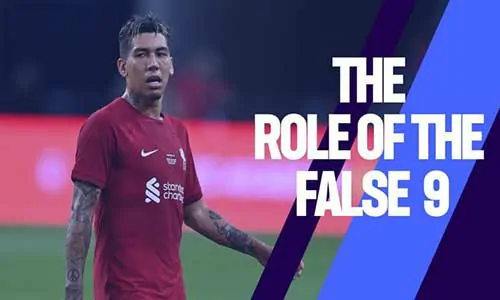
Football tactics have undergone a massive transformation over the last few decades. The game has transitioned from rigid positional systems to highly fluid, space-oriented philosophies. Among all the tactical innovations that have redefined the modern game, few positions carry as much intrigue and tactical weight as the deep-lying playmaker-striker hybrid. In this comprehensive guide, we have the False 9 Explained in full detail, analyzing how this role works, its profound impact on defensive structures, and the legendary figures who have defined it.
Historically, the striker was expected to remain on the shoulder of the last defender, waiting for crosses or through balls. However, the introduction of a forward who consciously abandons the penalty area to drop deep into midfield completely disrupted traditional defensive systems. By doing so, the role creates structural chaos for opponents, demanding exceptional tactical intelligence and technical skill. Let us explore the mechanics, history, and impact of this fascinating footballing role.
Table of Contents
- What is a False 9? The Core Definition
- The Tactical Evolution: The False 9 Explained Historically
- Tactical Mechanics: How the False 9 Creates Space
- Attributes of an Elite Player: The False 9 Explained
- The False 9 Explained vs. Traditional Strikers
- Legendary Masters: The False 9 Explained Through Iconic Players
- How Managers Counter the False 9 Position
- Frequently Asked Questions: The False 9 Explained
What is a False 9? The Core Definition
To put it simply, a False 9 is a conventional center-forward who departs from the traditional striker role. Instead of pinning opposition center-backs deep inside their own penalty box, a False 9 drops deep into the space between the opponent’s midfield and defensive lines. This area is often referred to by tactical analysts as the “zone between the lines.”
The primary objective of this movement is to create a numerical overload in the midfield while simultaneously pulling the opponent’s central defenders out of their natural positions. When a central defender follows the False 9 into the midfield, they leave a massive gap in the defensive line. If they decide to stay in position, they allow the False 9 time and space on the ball to turn, face the goal, and pick out dangerous passes. This dilemma is what makes the role so incredibly difficult to defend against.
The Tactical Evolution: The False 9 Explained Historically
While many fans associate the False 9 with modern tactical frameworks, its origins trace back nearly a century. To understand its modern application, we must first look at the pioneering teams of the past. The tactical evolution of the position shows that dropping deep to pull defenders out of position is a concept almost as old as organized football itself.
The earliest documented use of a deep-lying forward occurred in the 1930s with the Austrian “Wunderteam.” Their center-forward, Matthias Sindelar, was physically slight and avoided physical battles with rugged defenders. Instead, he dropped deep to link up play, orchestrating attacks from deep. This movement puzzled contemporary defenders who were accustomed to marking static target men. Sindelar’s movement laid the groundwork for future generations of tacticians.
In the 1950s, the legendary Hungarian national team, known as the “Mighty Magyars,” utilized Nándor Hidegkuti in a similar capacity. In their historic 6-3 victory over England at Wembley in 1953, Hidegkuti’s deep movements left the English center-back, Harry Johnston, with no clear marking assignment. If Johnston followed him, huge spaces opened up for players like Ferenc Puskás and Sándor Kocsis to exploit. This match is widely considered a turning point in football history, as it proved the superiority of fluid movement over rigid positioning.
Decades later, Johan Cruyff integrated these ideas into Ajax’s Total Football and later into his “Dream Team” at Barcelona during the early 1990s. Cruyff used Michael Laudrup as a deep-lying central forward, allowing wide players like Hristo Stoichkov to make diagonal runs into the vacant central spaces. This approach proved that having the False 9 Explained to players within a fluid system could completely dismantle even the most organized defensive structures.
Tactical Mechanics: How the False 9 Creates Space
To appreciate the beauty of this role, we must examine the specific mechanics of spatial manipulation. When analyzing the False 9 Explained in modern coaching clinics, the focus is always on creating “decisional crises” for the opponent’s backline. The movement of a single player can systematically break down an entire defensive structure.
Spatial Manipulation: How the False 9 Explained Mechanics Work
The primary tactical weapon of the False 9 is the diagonal run or the simple vertical drop. When the team is in possession in the middle third, the False 9 walks or jogs backward toward the midfield circle. This movement forces the opposing center-backs into a difficult split-second decision:
- Option A: Follow the Runner. If a center-back follows the False 9 into the midfield, they maintain pressure on the ball but destroy the horizontal integrity of their defensive line. This creates a massive gap that can be exploited by fast wingers or central midfielders making third-man runs.
- Option B: Drop Off and Maintain the Line. If the center-backs decide to stay in their defensive line, the False 9 is left completely unmarked in the space between the midfield and defense. The False 9 can then receive the ball, turn, and act as a playmaker, driving at the defense or sliding passes into teammates.
Creating Numerical Overloads in Midfield
In modern football, dominating the center of the pitch is often key to controlling the match tempo. In a standard 4-3-3 formation, both teams typically feature three central midfielders. However, when the central striker drops deep, the attacking team suddenly has four players in midfield against the opponent’s three. This numerical superiority makes it much easier to retain possession, bypass the opponent’s press, and transition smoothly into the final third.
This overloading mechanism is highly effective against teams that employ a mid-block or high-press defensive scheme. By outnumbering the opponent in the central areas, the attacking side can consistently find the free man, frustrating the opposition and wearing them down physically and mentally over ninety minutes.
Attributes of an Elite Player: The False 9 Explained
Not every striker has the physical or technical profile to succeed as a False 9. In fact, it is widely considered one of the most demanding positions on the football pitch, requiring a highly specialized set of skills. Without these attributes, the system can easily stagnate, leaving the attacking team without a focal point.
- Exceptional Spatial Awareness: A False 9 operates in the tightest areas of the pitch, surrounded by opposition midfielders and defenders. They must possess an innate understanding of where space lies, where their teammates are moving, and where the defenders are positioned before even receiving the ball.
- Elite First Touch and Ball Retention: Because they constantly receive the ball with their back to the goal and with heavy pressure from behind, their technical ability must be immaculate. A poor first touch will immediately result in a turnover and a dangerous counter-attack for the opponent.
- Playmaking Vision and Passing Accuracy: With the False 9 Explained as a playmaker-striker hybrid, passing accuracy is non-negotiable. They must have the vision of a classic number 10, capable of playing delicate through balls, switches of play, and rapid one-touch combinations.
- Tactical Discipline and Patience: Playing this role requires immense selflessness. The player must accept that they will often spend long periods away from the penalty box, acting as a decoy to create space for others rather than scoring themselves.
- Composure in Front of Goal: Despite spending much of the match in midfield, the False 9 is still a forward. When opportunities arise in the box, they must possess the composure and clinical finishing ability of a traditional striker to convert chances.
The False 9 Explained vs. Traditional Strikers
To better illustrate how this role differs from other forward positions, let us examine a direct comparison of their primary tactical responsibilities, movement patterns, and key objectives on the pitch.
Primary PositionMovement PatternKey Role in PossessionPrimary Goal SourceDefensive Role
| Feature / Attribute | Traditional Number 9 | Target Man | The False 9 |
|---|---|---|---|
| Shoulder of the last defender | Central, high up the pitch | Between the midfield and defense | |
| Runs behind the defense, vertical | Static focal point, aerial battles | Drops deep, lateral, and diagonal | |
| Finishing chances, stretching play | Holding up long balls, physical duels | Linking play, creating overloads | |
| Inside the penalty area | Headers, rebounds, close range | Late runs, long-range shots, wingers | |
| Pressing center-backs | Occupy defenders, physical block | Pressing, closing passing lanes in midfield |
Legendary Masters: The False 9 Explained Through Iconic Players
To truly understand the practical application of this position, we must look at the legendary figures who have defined and refined the role over the years. These players did not merely play the position; they transformed our understanding of how attacking football can be played.
Francesco Totti – The Pioneer of the Modern Era
Before the tactical revolution of the late 2000s, AS Roma manager Luciano Spalletti was faced with an injury crisis in the 2005/2006 season. Lacking a fit traditional striker, Spalletti deployed the iconic Francesco Totti as a lone central forward in a fluid 4-6-0 formation. Rather than staying high, Totti dropped deep, using his world-class vision and exquisite passing range to spray balls to surging wingers.
This tactical experiment proved to be a masterstroke. With Totti playing as a deep-lying forward, Roma played some of the most attractive football in Europe. Totti’s performances during this period showed that the role of the False 9 Explained was less about relentless dribbling and more about rapid, one-touch distribution and elite spatial control.
Lionel Messi – The Absolute Pinnacle
The most famous and successful deployment of the False 9 came under Pep Guardiola at Barcelona. In May 2009, ahead of a crucial El Clásico match against Real Madrid, Guardiola made a historic tactical adjustment. He moved Lionel Messi from the right wing to the center of the pitch, instructing him to drop deep into midfield.
The result was a devastating 6-2 victory for Barcelona. Real Madrid’s central defenders, Fabio Cannavaro and Christoph Metzelder, were completely bewildered. They did not know whether to track Messi into midfield or stay in position. Messi’s unique blend of dribbling, passing, and lethal finishing made him the ultimate expression of the role, culminating in his historic 91-goal calendar year in 2012. Observing Messi’s movement shows us the position at its absolute peak, where a single player could dominate every phase of an attacking transition.
Roberto Firmino – The Defensive Facilitator
Under Jürgen Klopp at Liverpool, the False 9 took on a highly modern, defensive twist. Roberto Firmino became the engine of Liverpool’s highly successful front three alongside Sadio Mané and Mohamed Salah. While traditional strikers are judged solely on goals, Firmino’s primary value lay in his incredible work rate, defensive pressing, and selflessness.
Firmino would drop deep to drag center-backs out of position, opening up diagonal lanes for Salah and Mané to sprint into from wide areas. Additionally, Firmino acted as the first line of defense, initiating Liverpool’s famous counter-press deep in the opponent’s half. This demonstrated that a False 9 could be just as crucial for a team’s defensive stability as they are for their attacking output.
How Managers Counter the False 9 Position
As with any tactical innovation, football managers eventually developed effective counter-strategies to neutralize the influence of the deep-lying forward. Understanding these defensive adjustments is crucial to comprehending the ongoing tactical chess match in elite football.
One of the most common ways to counter a False 9 is the implementation of a highly disciplined low-block defense. By defending deep and keeping the space between the midfield and defensive lines extremely compact, defenders deny the forward the room they need to receive the ball and turn. This approach requires immense concentration, as defenders must resist the temptation to step out of their defensive shape to engage the player.
Another popular solution is assigning a defensive midfielder, often referred to as a “destroyer” or “screen,” to specifically mark the zone where the False 9 drops. By having a dedicated midfielder pick up the forward as they drop deep, the central defenders are freed from their dilemma. They can remain in their defensive line, maintaining their defensive shape and preventing wide runners from exploiting central spaces.
For more detailed tactical breakdowns of modern football systems, you can explore in-depth analysis on trusted tactical platforms like The Coaches’ Voice and keep up with elite competitive analysis on FIFA.
Frequently Asked Questions: The False 9 Explained
1. What is the difference between a False 9 and a classic Number 10?
While both players occupy similar spaces in the midfield, they originate from different areas of the pitch. A classic Number 10 starts in midfield and looks to play forward to a striker. A False 9 starts as the designated lone striker on the team sheet and intentionally drops backward into midfield, leaving the forward line temporarily vacant.
2. Can any striker play as a False 9?
No. The role requires a highly specialized skill set. Traditional, physical target men who rely on strength and aerial ability often struggle in this role because they lack the tight-space agility, elite passing vision, and quick turning capabilities required to play in congested midfield areas.
3. Why do managers use a False 9 instead of a traditional striker?
Managers use this tactic to gain a numerical advantage in midfield, improve ball retention, and disrupt defensive lines. It is particularly effective against teams that defend with rigid, man-marking defensive systems, as it forces defenders into uncomfortable decisions.
4. What does the False 9 Explained mean for youth academies today?
For modern youth development, this position highlights the importance of versatile player profiles. Academies no longer train forwards solely to finish chances. Instead, young players are taught spatial awareness, midfielder-like passing, and defensive pressing from a very young age to prepare them for fluid modern tactical systems.
5. Which formations work best with a False 9?
The 4-3-3 is the most common and effective formation for this role. It provides the necessary wide forwards who can run into the central space vacated by the False 9. Additionally, a 4-6-0 or a highly fluid 4-1-2-1-2 can also accommodate the role successfully under specific tactical setups.
6. Is the False 9 still popular in modern football?
Yes, though its application continues to evolve. While many elite clubs have returned to using traditional, physical strikers like Erling Haaland, managers still use deep-lying forward variations regularly to break down compact defensive blocks or adjust to specific opponents during matches.
Final Thoughts on the False 9 Explained
The evolution of the False 9 serves as a perfect example of how football tactics are constantly changing. What began as a physical necessity in the 1930s has evolved into one of the most sophisticated tactical systems in sports history. By breaking down the traditional boundaries of positional play, this role changed how coaches, players, and fans understand space on the pitch.
Whether utilized to create midfield overloads, assist in a high-pressing defensive scheme, or open up spaces for clinical inside forwards, this position remains an incredibly powerful tool in a manager’s tactical toolkit. As football tactics continue to develop, the core principles of space manipulation and fluid movement will undoubtedly remain central to the beautiful game.