FIFA Calendar Explained: Key Changes Leading to World Cup 2026
The global football landscape is currently witnessing one of its most transformative eras. As national teams, clubs, and governing bodies prepare for the expanded FIFA World Cup 2026, major logistical and structural modifications are being made behind the scenes. Central to this monumental evolution is the redesigned FIFA Men’s International Match Calendar. Far from being just a set of dates, this calendar represents the delicate equilibrium between player welfare, club interests, and the growing ambition of global national team competitions. In this comprehensive guide, we will unpack the crucial changes made to the international match cycle, explain how they directly influence the preparations for the FIFA World Cup 2026, and look at what these reforms mean for the future of the beautiful game.
- 1. Why the Match Calendar Needed Reform Ahead of the FIFA World Cup 2026
- 2. The Big Merge: The 16-Day September/October Window
- 3. Structural Expansion: Navigating the 48-Team FIFA World Cup 2026
- 4. Comparative Breakdown: Old vs. New World Cup Formats
- 5. Player Welfare and Rest Rules Before the FIFA World Cup 2026
- 6. The FIFA Series: Broadening the Horizon of Global Friendlies
- 7. Domestic Leagues and Club Football: Navigating the New Reality
- 8. Conclusion: Preparing for the Historic FIFA World Cup 2026
- 9. Frequently Asked Questions (FAQ)
1. Why the Match Calendar Needed Reform Ahead of the FIFA World Cup 2026
For decades, the scheduling of international football was a frequent source of tension between national associations and elite club sides. The traditional calendar structure divided the year into several short, sporadic windows—namely in March, June, September, October, and November. Under this old framework, players were required to repeatedly depart their domestic clubs, fly thousands of miles to represent their countries for two matches, and rapidly return to club duty. This constant back-and-forth travel created severe physical strain, increased injury risks, and disrupted the rhythmic flow of domestic leagues.
As plans emerged to expand the highly anticipated FIFA World Cup 2026 into a massive 48-team tournament, a fundamental modernization of the calendar became unavoidable. FIFA, in consultation with continental confederations, member associations, the European Club Association (ECA), and the player union FIFPro, sought to establish a more streamlined system. The primary objective of the newly adopted Men’s International Match Calendar 2025-2030 is to strike a sustainable balance. By consolidating specific windows and safeguarding rest periods, the revised schedule aims to preserve player health while enhancing the competitive quality of both domestic leagues and international tournaments.
2. The Big Merge: The 16-Day September/October Window
Perhaps the most radical and widely discussed change in the 2025-2030 cycle is the consolidation of the autumn international breaks. Historically, the post-summer football season was interrupted twice in rapid succession: once in early September and again in mid-October. Each of these breaks required leagues to halt for nine days so that national teams could play a maximum of two matches.
To resolve this disruption, FIFA has introduced a unified **16-day, four-match window** to be scheduled in late September/early October, starting officially in 2026. Consequently, the separate September and October breaks will be permanently phased out. Under this consolidated model, domestic club football will pause only once during the early autumn. Players will join their respective national squads for a continuous block of just over two weeks, allowing teams to play up to four crucial fixtures—such as vital qualifiers for the FIFA World Cup 2026—before returning to their clubs.
This structural change offers profound benefits across the board:
- Reduced Transcontinental Travel: Players from South America, Africa, and Asia who compete in European leagues will only have to make one round-trip flight during the autumn instead of two.
- Extended Tactical Preparation: National team managers will have longer, continuous training blocks to work with their squads, leading to better tactical cohesion.
- Club Continuity: Domestic leagues can maintain a steady, uninterrupted run of matches throughout October and November, keeping fans engaged and reducing scheduling congestion.
Player Welfare and Travel Reductions Ahead of FIFA World Cup 2026
The consolidation of international windows directly addresses player burnout. Scientific data has long highlighted how rapid travel across multiple time zones degrades sleep quality, increases muscle fatigue, and elevates soft-tissue injury risks. By implementing the 16-day window, FIFA and confederations are limiting the frequent disruption of players’ recovery cycles. This long-term preventative measure ensures that athletes are not physically depleted by the time they arrive at the tournament in the summer of 2026.
3. Structural Expansion: Navigating the 48-Team FIFA World Cup 2026
The upcoming tournament, hosted jointly across Canada, Mexico, and the United States, represents a historic leap in size and scope. Moving away from the 32-team format that was used since 1998, the FIFA World Cup 2026 will welcome 48 nations. This expansion is designed to provide greater global representation, giving emerging football nations in Africa, Asia, and North America a far better opportunity to showcase their talents on the world stage.
Managing a tournament of this magnitude required a complete reimagining of the competition schedule. Initially, FIFA contemplated groups of three teams. However, to preserve the competitive tension, avoid the risk of collusion in final group matches, and ensure that every team plays at least three games, the FIFA Council ratified a **12 groups of four teams** structure.
This structural decision has a major impact on the overall match calendar:
- Total Matches: The tournament will expand from 64 matches to a record-breaking 104 matches.
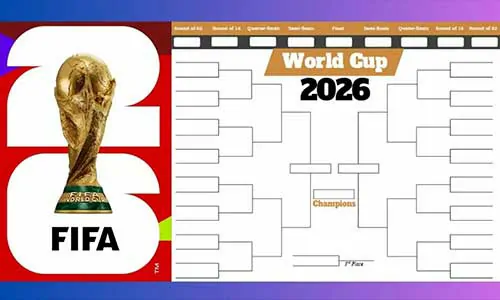
- New Knockout Phase: A new Round of 32 has been introduced. This means the top two teams from each of the 12 groups, alongside the eight best third-place finishers, will advance to the knockouts.
- Path to the Trophy: To win the tournament, the eventual champions must play eight matches instead of the traditional seven.
- Tournament Duration: The entire competition will take place over a highly optimized 39-day window, starting on June 11 and culminating in the final on July 19, 2026.
4. Comparative Breakdown: Old vs. New World Cup Formats
To fully grasp how significantly the scheduling dynamics have evolved, it is helpful to look at a direct comparison of the structural differences between previous tournaments and the newly formatted tournament.
| Tournament Feature | Traditional Format (e.g., Qatar 2022) | Expanded Format (FIFA World Cup 2026) |
|---|---|---|
| Total Participating Teams | 32 Teams | 48 Teams |
| Total Matches Played | 64 Matches | 104 Matches |
| Group Stage Structure | 8 Groups of 4 Teams | 12 Groups of 4 Teams |
| Knockout Stage Progression | Begins at Round of 16 | Begins at Round of 32 |
| Maximum Matches for Finalists | 7 Matches | 8 Matches |
| Tournament Duration | 29 Days (Compressed winter schedule) | 39 Days (Traditional summer schedule) |
| Host Countries | 1 Host Country (Qatar) | 3 Host Countries (Canada, Mexico, USA) |
This comparative overview clearly highlights the massive scale of the upcoming FIFA World Cup 2026. Increasing the total volume of matches by over 60% poses a serious challenge for squad depth and physical endurance. To offset these intense demands, specific safeguards regarding preparation periods and mandatory post-season rest have been integrated into the international agreement.
5. Player Welfare and Rest Rules Before the FIFA World Cup 2026
A central pillar of the calendar negotiations was safeguarding the physical health of elite players. The extreme compression of the 2022 World Cup in Qatar—which took place in the middle of the European club season with only a single week of preparation—was widely regarded as an anomaly that should not be repeated. Consequently, the preparation window for the FIFA World Cup 2026 has been carefully structured to mirror historical benchmarks.
The total cumulative allocation of rest, release, and tournament days for the 2026 edition is set at **56 days**. This is identical to the duration allocated for the 2010, 2014, and 2018 tournaments, providing a highly balanced environment for the athletes. The framework operates as follows:
- Domestic League Deadline: All domestic league matches must conclude by Sunday, May 24, 2026. This ensures leagues do not spill over into national team preparation camps.
- Mandatory Release Date: The official club release period begins on Monday, May 25, 2026. All qualified players must be allowed to join their respective national team camps on this date.
- Club Finals Exception: To accommodate continental club showpieces, players involved in major confederation club finals (such as the UEFA Champions League final) may remain with their clubs until May 30, 2026, subject to formal FIFA approval.
Furthermore, because the tournament will span vast distances across three distinct time zones (Eastern, Central, and Pacific) and varying climates, this extended preparation window is vital. It allows teams to acclimatize, recover from a long club season, and prepare their physical conditioning to match the intense demands of the expanded competition.
6. The FIFA Series: Broadening the Horizon of Global Friendlies
In addition to reorganizing qualification pathways and tournament lengths, FIFA has actively worked to foster international development during non-tournament windows. Historically, international friendly matches were highly regionalized. European nations played other European sides in the UEFA Nations League, leaving very few opportunities for cross-continental matches.
To remedy this, FIFA approved the launch of the **FIFA Series**. This innovative initiative organizes friendly matches between national teams from entirely different confederations during the March/April international window of even-numbered years.
For example, during the build-up to the FIFA World Cup 2026, dozens of teams from CAF, AFC, CONCACAF, CONMEBOL, OFC, and UEFA participated in centralized mini-tournaments hosted across the globe. This setup allows lower-ranked or developing nations to experience diverse playing styles, travel dynamics, and tactical setups that they would normally never encounter outside of an actual World Cup group stage. Ultimately, the FIFA Series serves as a practical developmental tool that elevates the overall quality of global football ahead of the expanded tournament.
7. Domestic Leagues and Club Football: Navigating the New Reality
While the restructured calendar is a major achievement for national team football, it presents domestic leagues with a highly complex jigsaw puzzle. Elite leagues such as the English Premier League, Spain’s La Liga, and Italy’s Serie A are forced to operate within increasingly tight scheduling parameters. This congestion is further intensified by the expanded Swiss-model formats implemented in European club competitions like the UEFA Champions League.
On one hand, the consolidated 16-day autumn window reduces the constant interruption of league campaigns, which club managers have historically appreciated. On the other hand, it packs club fixtures closer together during the mid-winter months. Squad rotation, load management, and sports science have become more critical than ever. Club managers must carefully monitor player minutes to prevent long-term fatigue and muscular injuries.
For broadcasters and sponsors, however, the consolidated windows are highly lucrative. Having a continuous, 16-day block of high-stakes international matches during the autumn creates an elite, festival-like television environment, driving massive viewership numbers and sustaining global fan engagement during periods that previously felt fragmented.
8. Conclusion: Preparing for the Historic FIFA World Cup 2026
Ultimately, the updated Men’s International Match Calendar is a bold, modern attempt to resolve a decades-old conflict between club and country. By merging autumn breaks into a unified 16-day window, enforcing strict player release periods, and introducing cross-continental initiatives like the FIFA Series, FIFA is laying down the logistical foundation for the most spectacular sporting event in human history.
While the physical demands of playing up to 104 matches across an entire continent will undoubtedly test the limits of modern squads, these structured changes ensure that the preparation is as safe, balanced, and competitive as possible. As we look ahead to the monumental kickoff of the FIFA World Cup 2026, fans can rest assured that the road to glory has been meticulously designed to deliver football of the highest caliber.
Are you ready to witness history unfold in Canada, Mexico, and the United States? Keep following our platform for the latest tactical breakdowns, stadium guides, and exclusive scheduling updates as we countdown to the ultimate global showdown!