Football Position Numbers Explained: The Meaning of 1 to 11
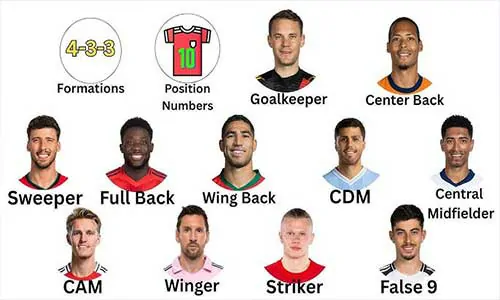
When you sit down to watch a match, having the concept of Football Position Numbers Explained can completely change how you view the tactical battle on the pitch. While modern squad sizes mean players now wear numbers ranging from 1 to 99, the classic numbering system of 1 to 11 remains the foundational language of football tactics. Managers, pundits, and scouts still refer to player roles by these traditional numbers, making it essential for any passionate fan to understand them.
Historically, shirt numbers were assigned to players based on their physical position in a standard formation. Additionally, as tactics evolved from the early 2-3-5 pyramid to the modern 4-3-3 and 4-4-2 systems, these numbers carried over, defining specific responsibilities. In this comprehensive guide, we will break down the history, tactics, and exact meanings behind each of the traditional starting eleven shirts.
Table of Contents
- The History Behind Football Position Numbers Explained
- Traditional Formations and Football Position Numbers Explained
- Number 1: The Goalkeeper
- Numbers 2 & 3: The Full-Backs
- Numbers 4 & 5: The Center-Backs
- Number 6: The Defensive Midfielder
- Number 8: The Box-to-Box Midfielder
- Number 10: The Playmaker / Attacking Midfielder
- Numbers 7 & 11: The Wingers
- Number 9: The Striker / Center-Forward
- Modern Tactics and Football Position Numbers Explained
- Summary Table of Football Positions
- FAQ: Football Position Numbers Explained
The History Behind Football Position Numbers Explained
The practice of numbering football players dates back to the early 20th century. For instance, the first recorded use of shirt numbers in a major competitive match occurred during the 1933 FA Cup Final between Everton and Manchester City. In that historic match, Everton players wore numbers 1 to 11, while Manchester City players wore 12 to 22. This simple innovation allowed referees, commentators, and fans in the stands to easily identify players on the pitch.
Following this successful trial, the Football League made shirt numbering mandatory in 1939. During this era, teams lined up in a standard 2-3-5 formation, widely known as the “Pyramid.” The numbers were distributed sequentially from the back of the pitch to the front, starting with the goalkeeper as number 1, moving through the defenders and midfielders, and ending with the left-winger as number 11.
Moreover, as football formations changed over the decades, these numbers shifted structurally but retained their core identity. Consequently, even in contemporary football, knowing the history of these designations helps us understand why a defensive midfielder in England is often called a “number 6,” while in other footballing cultures, the role might carry a different digit.
Traditional Formations and Football Position Numbers Explained
To truly grasp how these roles interact, we must look at how the classic numbers translated from the old 2-3-5 “Pyramid” to the widely recognized 4-4-2 and 4-3-3 formations. As the deep defensive line became more popular, players dropped back, pulling their assigned numbers with them. Therefore, the way we analyze defensive and midfield roles today is directly tied to these tactical shifts.
If you want defensive Football Position Numbers Explained, we must look at how the backline evolved. The full-backs (numbers 2 and 3) were pushed wide to deal with opposing wingers, while the center-backs (traditionally numbers 4 and 5 in many cultures, or 5 and 6 in others) anchored the middle of the defense. Similarly, midfield dynamics altered how numbers 6, 8, and 10 interacted to control the tempo of the game.
In the sections below, we will explore each of these positions individually, detailing their traditional duties, modern tactical evolutions, and some of the most famous players to have graced each shirt number.
Number 1: The Goalkeeper
When looking at Football Position Numbers Explained, the number 1 is the most straightforward. Positioned at the very back of the formation, the goalkeeper is the team’s last line of defense. The primary objective of the number 1 is to prevent the ball from crossing the goal line, using any part of their body within the penalty box.
Traditionally, the goalkeeper was expected to stay close to their line, focus heavily on shot-stopping, and launch long clearances up the pitch. However, modern tactics have transformed the expectations placed on the number 1. Today, elite managers require their goalkeepers to act as “sweeper-keepers,” playing an active role in building attacks from the back with precise passing.
Furthermore, keepers must possess excellent spatial awareness to rush out of their penalty area and clear danger before opposing forwards can reach long overhead balls. Famous modern examples like Manuel Neuer and Ederson have redefined this position, showing that the number 1 is just as critical in possession as they are in defense.
Numbers 2 & 3: The Full-Backs
The numbers 2 and 3 are historically assigned to the right-back and left-back, respectively. In a traditional four-man defense, these players occupy the wide defensive zones. Their main defensive responsibility is to neutralize opposing wingers, block crosses into the penalty box, and maintain a compact shape alongside the center-backs.
Nevertheless, the role of the modern full-back has evolved into one of the most physically demanding positions in football. Rather than staying deep, modern full-backs are expected to sprint up and down the flanks, providing essential attacking width to their team. They must possess great stamina, crossing ability, and 1v1 defensive skills.
In addition to traditional overlapping runs, some tacticians now utilize “inverted full-backs.” These players drift into the midfield during possession, helping to dominate the center of the pitch. Iconic players who defined these numbers include Cafu and Gary Neville for the number 2, and Paolo Maldini and Roberto Carlos for the number 3.
Numbers 4 & 5: The Center-Backs
In most traditional systems, numbers 4 and 5 represent the heart of the defense: the center-backs. Their main objective is to protect the central area directly in front of the goalkeeper. They must excel in aerial duels, possess strong tackling capabilities, and demonstrate excellent positioning to intercept passes.
While the number 5 is almost universally a dedicated central defender, the number 4 has occasionally shifted roles depending on regional footballing cultures. In English football, the number 4 has sometimes been assigned to a defensive midfielder who drops deep to protect the backline, whereas in continental Europe, it is strictly a center-back’s number.
On the other hand, the modern center-back is no longer just a physical destroyer. They must be highly comfortable on the ball, initiating attacks with short, crisp passes or sweeping diagonal long balls. Legends of the game like Virgil van Dijk (often wearing 4) and Fabio Cannavaro (famous as a number 5) showcase the perfect blend of physical dominance and technical intelligence required for these roles.
Number 6: The Defensive Midfielder
If you want midfield Football Position Numbers Explained, the roles are divided by work rate, defensive duty, and creativity. The number 6 sits at the base of the midfield unit, acting as a shield for the back four. Often referred to as the “anchor man” or “deep-lying playmaker,” this player is responsible for breaking up opposition attacks and quickly transitioning the ball forward.
To excel in this role, a player must possess outstanding tactical discipline. They rarely join the attack in the opposing penalty area; instead, they remain in a central, deeper position to prevent counter-attacks. Additionally, they must have a high passing accuracy to retain possession under intense pressure from opposing forwards.
In different tactical systems, the number 6 can take on different styles. For example, some are physical destroyers who rely on sliding tackles, while others are elegant distributors, often referred to as a “Regista” in Italian football. Famous masters of this position include Sergio Busquets, Claude Makélélé, and Andrea Pirlo.
Number 8: The Box-to-Box Midfielder
The number 8 is typically assigned to the central midfielder, often described as the “box-to-box” player. This position requires immense physical endurance and versatility, as the player must contribute equally in their own defensive third and the opposition’s penalty area. They are the engine room of the team.
Defensively, the number 8 assists the number 6 by pressing opponents, reclaiming loose balls, and tracking runner movements. Offensively, they make late, untracked runs into the penalty box to score goals, provide creative key passes, and link the midfield with the attack.
Therefore, having a balanced number 8 is crucial for keeping tactical fluidity on the pitch. They connect the defensive and offensive phases of play seamlessly. Historic icons like Steven Gerrard, Andres Iniesta, and Frank Lampard are prime examples of the dynamic, goal-scoring, and creative traits required to wear the prestigious number 8.
Number 10: The Playmaker / Attacking Midfielder
Perhaps no shirt number in football history carries as much romance, expectation, and prestige as the number 10. Traditionally assigned to the central attacking midfielder or playmaker, the number 10 is the creative heartbeat of the team. Operating in the “pockets of space” between the opposition’s midfield and defense, this player’s job is to create goal-scoring opportunities.
A classic number 10 possesses elite vision, immaculate dribbling skills, and the ability to execute defense-splitting passes. They are often given tactical freedom by their managers, allowing them to drift across the pitch to find weak spots in the opponent’s defensive block.
Furthermore, the number 10 is frequently expected to contribute a significant number of goals themselves, whether through long-range strikes or clever finishes inside the box. Legendary figures such as Diego Maradona, Pelé, Zinedine Zidane, and Lionel Messi have cemented the number 10 shirt as a symbol of footballing genius.
Numbers 7 & 11: The Wingers
With wide attacking Football Position Numbers Explained, we look at the dynamic forces on the flanks: the numbers 7 and 11. Traditionally, the number 7 is the right-winger and the number 11 is the left-winger. Their primary responsibilities are to stretch the opposition’s defense wide, beat full-backs in 1v1 situations, and deliver accurate crosses to the central striker.
Historically, wingers stayed strictly on their respective touchlines. However, modern tactics have popularized the use of “inverted wingers.” In this system, a right-footed player plays on the left flank (as a number 11) and a left-footed player plays on the right flank (as a number 7). This allows them to cut inside onto their stronger foot to shoot or combine with midfielders.
In addition to their offensive output, modern wingers must also possess a high work rate to track back and support their full-backs defensively. Famous wearers of the number 7 include Cristiano Ronaldo and David Beckham, while the number 11 has been worn by legendary wide players like Ryan Giggs and Mohamed Salah.
Number 9: The Striker / Center-Forward
The number 9 is the focal point of the team’s attack: the classic striker or center-forward. Positioned closest to the opposition’s goal, the primary and most important job of the number 9 is simple: score goals. They are the target man, expected to convert crosses, win physical duels against center-backs, and spearhead the offensive line.
A traditional number 9 relies heavily on physical strength, positioning, and clinical finishing inside the penalty area. They must have sharp instincts to anticipate where a loose ball might drop and react faster than the defenders surrounding them.
In contrast, modern tactical systems have introduced variations like the “False 9.” In this setup, the nominal striker drops deep into midfield to drag opposing center-backs out of position, creating space for wingers to run into. Whether playing as a traditional target man or a modern fluid forward, players like Ronaldo Nazário, Robert Lewandowski, and Erling Haaland represent the pinnacle of the number 9 role.
Modern Tactics and Football Position Numbers Explained
While the traditional 1 to 11 system provides an incredibly useful framework for understanding player roles, modern football has evolved far beyond these rigid definitions. Today, squad numbers are highly personalized, and players often choose numbers based on personal preference, marketing, or sentimental value rather than their tactical position on the pitch.
Moreover, modern tactical systems are highly fluid. A player might start a match as a nominal number 10 but spend most of the game dropping deep to act as a number 8, or drifting wide to act as an inverted number 11. This fluidity makes it even more important to understand the core characteristics associated with each traditional position number.
By studying how these roles originated and evolved, fans and analysts can quickly identify tactical shifts during a live match. For instance, when a coach instructs their team to play with a “double pivot” (two number 6s), or to utilize an attacking midfielder in a free role (a classic number 10), they are using a tactical shorthand that has been refined over nearly a century of footballing history.
Summary Table of Football Positions
Below is a quick-reference table summarizing the classic 1 to 11 system, outlining their traditional positions, modern roles, and legendary examples of players who defined them.
| Number | Traditional Position | Modern Tactical Role | Key Attributes | Famous Examples |
|---|---|---|---|---|
| 1 | Goalkeeper | Sweeper-Keeper | Shot-stopping, distribution, positioning | Manuel Neuer, Gianluigi Buffon |
| 2 | Right-Back | Attacking Full-Back / Inverted Back | Stamina, crossing, 1v1 defending | Cafu, Gary Neville |
| 3 | Left-Back | Attacking Full-Back / Inverted Back | Pace, work rate, crossing ability | Paolo Maldini, Roberto Carlos |
| 4 | Center-Back | Ball-Playing Defender | Strength, heading, tactical reading | Virgil van Dijk, Sergio Ramos |
| 5 | Center-Back | Ball-Playing Defender | Tackling, aerial dominance, leadership | Fabio Cannavaro, Carles Puyol |
| 6 | Defensive Midfielder | Anchor Man / Deep Playmaker | Interceptions, passing, tactical discipline | Sergio Busquets, Claude Makélélé |
| 7 | Right-Winger | Inverted Forward / Classic Winger | Dribbling, pace, off-the-ball runs | Cristiano Ronaldo, David Beckham |
| 8 | Central Midfielder | Box-to-Box Midfielder | Stamina, passing, late penalty box runs | Steven Gerrard, Andres Iniesta |
| 9 | Striker | Target Man / Poacher / False 9 | Clinical finishing, physical strength | Ronaldo Nazário, Erling Haaland |
| 10 | Attacking Midfielder | Creative Playmaker / Trequartista | Vision, creativity, dribbling, shooting | Lionel Messi, Diego Maradona |
| 11 | Left-Winger | Inverted Forward / Classic Winger | Pace, crossing, finishing ability | Ryan Giggs, Mohamed Salah |
To learn more about how governing bodies view the official laws of the game, you can refer to the official FIFA resources. For deep dives into tactical trends across European leagues, the Coaches’ Voice offers invaluable expert breakdowns of modern playing styles.
FAQ: Football Position Numbers Explained
What is the difference between a number 6 and a number 8 in football?
The primary difference lies in their defensive vs. offensive responsibilities. A number 6 is a defensive midfielder who sits deep, protects the backline, and anchors the midfield. In contrast, a number 8 is a box-to-box midfielder who works dynamically across the entire pitch, contributing to both defending in their own half and attacking in the opposition’s box.
Why do modern football players wear high numbers like 45 or 99?
Modern squad sizes have expanded significantly compared to the classic era. Leagues now allow players to choose personalized squad numbers for marketing, personal branding, or sentimental reasons. For example, some players choose a number because it was their youth academy designation, while others choose high numbers that add up to their favorite single-digit number.
What is a “False 9” in football?
A “False 9” is a tactical variation of the traditional number 9 striker. Instead of staying high up the pitch against the opposition’s center-backs, a False 9 drops deep into the midfield space during possession. This movement pulls defenders out of their natural positions, creating wide open spaces for wingers and midfielders to exploit.
Can a goalkeeper wear a number other than 1?
Yes, goalkeepers can wear other numbers, especially substitute keepers who often wear numbers like 12, 13, 22, or 25. While the starting goalkeeper traditionally wears the number 1 shirt, rules in most modern domestic leagues allow players to wear any squad number assigned to them at the start of the season.
Who is the most famous number 10 in football history?
The number 10 shirt has been worn by many of the greatest players in history, making a single choice subjective. However, Lionel Messi, Diego Maradona, Pelé, and Zinedine Zidane are widely considered the most iconic players to have worn the number 10, cementing its reputation as the shirt of footballing geniuses.
How did football position numbers start?
Football position numbers officially started in the early 20th century to help spectators, referees, and journalists identify players. They were first used in a major English cup final in 1933 and were subsequently made mandatory in 1939, with numbers assigned sequentially from 1 to 11 based on the traditional 2-3-5 formation.
Conclusion
In conclusion, having these traditional Football Position Numbers Explained gives you a foundational understanding of the game’s tactical blueprint. While formations and squad numbers have evolved to become more complex, the core responsibilities associated with numbers 1 through 11 still dictate how modern managers design their tactical structures.
Whether you are analyzing a high-pressing modern 4-3-3 or a resilient classic 4-4-2, knowing the distinct profiles of the defensive anchor (6), the dynamic engine (8), the creative genius (10), and the clinical goalscorer (9) will elevate your tactical appreciation. Next time you watch your favorite club play, take a closer look at how their movements reflect these historic numerical roles!
Do you want to take your football tactical knowledge to the next level? Share this guide with your friends, leave a comment below telling us which position number you play, and subscribe to our newsletter for more deep tactical breakdowns!