Football Yellow and Red Cards Explained: Rules, Suspensions and History
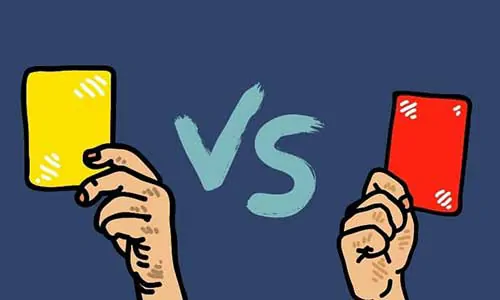
Football is a game of immense passion, where split-second decisions can alter the course of sports history. To maintain order amidst the high-octane environment of the pitch, referees rely on a highly effective visual disciplinary system. In this comprehensive guide, we provide Football Yellow and Red Cards Explained to help you understand the rules, suspensions, and historical context of these famous disciplinary symbols. Whether you are a casual fan trying to grasp the basics or a seasoned pundit looking for detailed suspension guidelines, understanding how booking systems work is vital to appreciating the tactical depth of modern soccer.
Table of Contents
- The History Behind Football Yellow and Red Cards Explained
- Rules of Caution: Football Yellow and Red Cards Explained
- Direct Red Cards: Dismissal and Consequences
- Suspensions and Bans: Football Yellow and Red Cards Explained
- Iconic Card Incidents in Football History
- The Modern Disciplinary Landscape: VAR and Captain-Only Zones
- At a Glance: Card Comparison Table
- Frequently Asked Questions (FAQ)
The History Behind Football Yellow and Red Cards Explained
Before the introduction of the modern card system, refereeing was a highly complicated and verbal affair. Historically, referees had to verbally caution or dismiss players. If a player did not speak the same language as the match official, it created massive confusion, often leading to chaotic misunderstandings on the pitch.
Consequently, the absolute breaking point occurred during the 1962 FIFA World Cup in Chile. In a highly hostile match between Chile and Italy, now famously dubbed the “Battle of Santiago,” English referee Ken Aston struggled to manage the escalating violence on the pitch. Because of language barriers, Italian player Giorgio Ferrini refused to leave the field after being verbally sent off, requiring local police to escort him away. This incident highlighted the desperate need for a universal, non-verbal system of discipline.
Furthermore, another major controversy erupted at the 1966 World Cup during a quarter-final match between Argentina and England. The Argentine captain, Antonio Rattín, was sent off by German referee Rudolf Kreitlein. Rattín did not understand the decision and spent several minutes arguing, refusing to leave the pitch because he demanded a translator. Meanwhile, English players Bobby and Jack Charlton only discovered they had been cautioned after reading the newspapers the following day. These recurring communication issues prompted FIFA to seek an immediate and innovative solution.
The solution came from Ken Aston, who was serving on the FIFA Referees’ Committee. While driving through London, Aston stopped at a traffic light on Kensington High Street. As the lights shifted from yellow to red, a spark of genius hit him. He realized that a simple color-coded system—yellow for caution, red for stop—would transcend all language barriers. As a result, the card system was trialed at the 1970 World Cup in Mexico, revolutionizing match officiating forever. To explore the foundational guidelines of match discipline, you can refer to the official IFAB Laws of the Game.
Rules of Caution: Football Yellow and Red Cards Explained
To fully grasp how the disciplinary system functions, we must examine the specific conditions that warrant a yellow card. Under international football guidelines, a yellow card acts as a formal caution. It serves as a serious warning that the player has breached the rules of fair play and must moderate their behavior for the remainder of the match.
According to Law 12 of the IFAB Laws of the Game, a referee can issue a yellow card for several distinct offenses. Specifically, these offenses include:
- Unsporting Behavior: This is a broad category covering reckless tackles, simulation (diving), physical holding to halt a counter-attack, or attempting to deceive the referee.
- Dissent by Word or Action: Arguing with the referee, making sarcastic gestures, or protesting a decision can result in an immediate booking.
- Persistent Infringement: When a player repeatedly commits minor fouls, the referee may issue a yellow card to curb their persistent rule-breaking.
- Delaying the Restart of Play: This includes kicking the ball away after a whistle, wasting time during throw-ins, or taking an excessive amount of time to take a goal kick.
- Failure to Respect Required Distance: Players must stand at least 10 yards away from free kicks or corner arcs during restarts. Failing to do so results in a caution.
- Entering or Leaving the Pitch Without Permission: Players must receive the referee’s signal before entering, re-entering, or deliberately walking off the playing field.
Rules of Caution: Football Yellow and Red Cards Explained
In addition to standard defensive infractions, tactical fouls have become a major focal point of modern football strategy. Often referred to as “professional fouls,” these are deliberate actions designed to stop an opposing team’s promising attack. While highly effective at preventing a goal-scoring opportunity, they are met with a swift and mandatory yellow card.
Furthermore, emotional outbursts often lead to avoidable bookings. For example, removing one’s shirt during a goal celebration is an automatic yellow card under modern regulations. Even though fans enjoy the passion, the rule remains strictly enforced to maintain professional standards and prevent excessive delays on the pitch.
Direct Red Cards: Dismissal and Consequences
On the other hand, a red card represents the ultimate on-field penalty. When a referee brandishes a red card, the offending player must leave the pitch immediately, is barred from the technical area, and cannot be replaced by a substitute. Consequently, the penalized team must play the rest of the match with only ten players, heavily shifting the tactical balance of the game.
A player can be sent off in one of two ways. First, they can receive two yellow cards in the same match, which automatically results in an indirect red card. Second, the referee can show a direct (or “straight”) red card for severe infractions. Straight red card offenses are reserved for actions that threaten the safety of players or compromise the core integrity of the match.
Specifically, direct red cards are awarded for the following offenses:
- Serious Foul Play: Any tackle or challenge that endangers the safety of an opponent or uses excessive force and brutality.
- Violent Conduct: Physical aggression that occurs away from the ball, such as punching, kicking, headbutting, or striking an opponent or official.
- Spitting or Biting: Extremely unsporting actions directed at an opponent, official, teammate, or spectator.
- Denying an Obvious Goal-Scoring Opportunity (DOGSO): Deliberately handling the ball to prevent a goal, or fouling an attacker who has a clear path to goal outside the penalty box.
- Using Offensive, Insulting, or Abusive Language: Directing derogatory comments or aggressive gestures at players, coaches, or match officials.
Consequently, receiving a red card carries severe tactical consequences. Managers are often forced to sacrifice an attacking player to bring on a defensive substitute, altering their entire strategy to survive the match with ten men. Therefore, avoiding red cards is a top priority for teams looking to secure points in competitive leagues.
Suspensions and Bans: Football Yellow and Red Cards Explained
The consequences of on-field bookings extend far beyond the final whistle of a single match. To enforce long-term discipline, football associations implement strict suspension guidelines based on the accumulation of cards over a season.
When looking at how Football Yellow and Red Cards Explained apply to domestic competitions, league systems differ slightly from cup tournaments. In domestic league structures, accumulating yellow cards triggers automatic multi-game bans. For instance, you can review the official disciplinary frameworks provided by The Football Association to see how rules are applied across professional tiers.
Suspensions and Bans: Football Yellow and Red Cards Explained
In the English Premier League, the suspension thresholds are highly structured to prevent repetitive fouling. The rules dictate the following progression for yellow card accumulation during a single league campaign:
- 5 Yellow Cards: If a player accumulates five bookings within their team’s first 19 Premier League fixtures, they serve an automatic 1-match suspension.
- 10 Yellow Cards: If a player reaches ten yellow cards before or including their team’s 32nd league fixture, they must serve a 2-match ban.
- 15 Yellow Cards: Accumulating fifteen bookings by the final day of the season results in a mandatory 3-match suspension.
- 20 Yellow Cards: If a player somehow manages to reach twenty yellow cards, their case is referred to a regulatory commission for an extended, custom punishment.
It is important to note that yellow cards are competition-specific and do not carry over from the Premier League to domestic cup competitions like the FA Cup or the EFL Cup. However, red cards are handled differently. Red card suspensions carry over across all domestic competitions, meaning a player sent off in a league match might serve their ban during an upcoming cup tie.
The length of a suspension for a red card depends heavily on the nature of the offense:
- DOGSO / Professional Foul: Typically results in a 1-match suspension.
- Dissent / Offensive Language: Usually carries a 2-match suspension.
- Violent Conduct / Serious Foul Play: Results in an automatic 3-match suspension, which can be extended if the national football association deems the tackle particularly malicious.
- Spitting at an Opponent: Carries a severe, mandatory 6-match suspension.
Iconic Card Incidents in Football History
Over the decades, the booking system has produced some of the most dramatic, shocking, and controversial moments in sports history. These incidents have defined tournaments and altered the careers of legendary figures.
Perhaps the most famous red card in history occurred during the 2006 FIFA World Cup Final. French legend Zinedine Zidane, playing in the final match of his illustrious career, was sent off in extra time after delivering a powerful headbutt to the chest of Italian defender Marco Materazzi. Played before a global audience of millions, the sudden dismissal left France without their talismanic captain, and Italy ultimately went on to win the tournament on penalties.
Another bizarre incident occurred during the same 2006 World Cup in a group-stage match between Croatia and Australia. English referee Graham Poll made an unprecedented blunder by showing Croatian defender Josip Šimunić three yellow cards before finally sending him off. Poll mistakenly noted the second yellow card under the Australian team’s roster due to Šimunić’s strong Australian accent, highlighting that even veteran officials can suffer high-pressure lapses in concentration.
Additionally, the 1998 World Cup witnessed a historic red card for England’s rising star, David Beckham. After being fouled by Argentine midfielder Diego Simeone, Beckham, whilst lying on the pitch, flicked his leg out in retaliation. The referee showed an immediate red card. Consequently, England was eliminated on penalties, and Beckham faced intense public scrutiny back home, showcasing the immense psychological pressure tied to disciplinary decisions.
Lastly, the notorious “Battle of Nuremberg” in 2006 remains the benchmark for physical chaos. In a round-of-16 clash between Portugal and the Netherlands, Russian referee Valentin Ivanov handed out a World Cup record 16 yellow cards and 4 red cards. The match dissolved into a series of tactical altercations, cementing its place as one of the most undisciplined fixtures in modern tournament history.
The Modern Disciplinary Landscape: VAR and Captain-Only Zones
As football enters a technology-driven era, the way discipline is handled continues to evolve. The introduction of the Video Assistant Referee (VAR) has drastically impacted the accuracy of red card decisions. Today, VAR protocol permits off-field officials to review straight red card incidents, ensuring that violent conduct or mistaken identity is swiftly corrected.
However, VAR is not permitted to review yellow cards or second yellow card dismissals. This rule ensures that the natural flow of the match is not excessively disrupted by minor officiating reviews. Consequently, players must still exercise caution, as standard bookings remain entirely at the on-field referee’s discretion.
To further improve player behavior, football boards have introduced “Captain-Only Zones” in recent seasons. Under this rule, only the team captain is permitted to approach the referee to discuss officiating decisions. Any other player who surrounds the referee or acts in an aggressive manner is subject to an immediate yellow card. This tactical adjustment has significantly reduced mass confrontations and protected the integrity of match officials.
Furthermore, referees have begun cracking down on time-wasting tactics. Goalkeepers are closely monitored under updated handling restrictions, and players who deliberately delay restarts face rapid cautions. These collective updates ensure that the booking system remains a modern, highly effective tool for maintaining fair play on the pitch.
At a Glance: Card Comparison Table
To summarize the fundamental differences between cautions and ejections, the table below offers a quick reference guide to the visual disciplinary system:
| Disciplinary Action | Primary Triggers | Immediate Match Impact | Standard Domestic Ban |
|---|---|---|---|
| Yellow Card | Tactical fouls, dissent, persistent fouling, delaying restarts. | Player remains on the field; receives a formal warning. | None (unless accumulation threshold is reached). |
| Second Yellow (Indirect Red) | Committing a second cautionable offense in the same match. | Player is ejected; team must play with ten men. | 1-match suspension. |
| Direct Red Card | Violent conduct, serious foul play, spitting, DOGSO, abuse. | Immediate ejection; team must play with ten men. | 1 to 3 matches (up to 6 matches for extreme cases like spitting). |
Frequently Asked Questions (FAQ)
Q1: Do yellow cards carry over from domestic leagues to cup competitions?
No. Under modern disciplinary guidelines, yellow cards are competition-specific. Therefore, a booking received in a league game will not accumulate toward a ban in domestic cups like the FA Cup or international cups like the Champions League. However, red cards are generally domestic-wide, meaning a suspension resulting from a red card will apply to the next competitive domestic fixture, regardless of the competition type.
Q2: Can a manager or coaching staff member receive yellow and red cards?
Yes. Referees have the authority to show yellow and red cards to managers, coaches, and other technical staff members sitting in the dugout. Offenses such as entering the opposing team’s technical area, throwing water bottles in protest, showing dissent, or acting aggressively toward officials will result in formal on-screen warnings or direct dismissals.
Q3: What happens if a team receives five red cards in a single match?
According to the official IFAB Laws of the Game, a match cannot continue if either team has fewer than seven players on the pitch. Consequently, if a team receives five red cards, the match must be immediately abandoned. Typically, the victory is automatically awarded to the opposing team as a 3-0 forfeit.
Q4: Can VAR review or overturn a standard yellow card?
No. VAR is restricted to reviewing four key game-changing areas: goals, penalty decisions, direct red cards, and mistaken identity. Therefore, VAR cannot intervene to overturn or issue a standard yellow card, unless the booking was shown to the wrong player or the challenge was deemed severe enough to warrant a straight red card.
Q5: When are yellow card accumulation tallies wiped clean?
In major international tournaments like the FIFA World Cup and the UEFA European Championship, yellow card tallies are wiped clean after the quarter-final round. This preventative rule ensures that players do not miss the highly anticipated final match due to minor card accumulation. In domestic leagues, accumulation cut-off dates are set mid-season (such as after the 19th and 32nd fixtures in the English Premier League).
Q6: Do cards shown during a penalty shootout count toward suspensions?
No. Bookings issued during the match (including extra time) do not carry over to a post-match penalty shootout. If a player receives a yellow card during the 120 minutes of play and then receives another yellow card during the penalty shootout, they are not sent off. The shootout is considered a separate disciplinary phase, although the incident is still reported to the governing football association.
Conclusion and Call to Action
To conclude, having Football Yellow and Red Cards Explained reveals that the booking system is much more than just a pair of colored cards in a referee’s pocket. It is a universal language, a tactical boundary, and a historical solution to communication barriers that once threatened the beautiful game. From the historic traffic-light inspiration of Ken Aston to the implementation of modern VAR reviews and Captain-Only Zones, the disciplinary system continues to adapt to preserve fairness, player safety, and the sporting spirit.
How do you feel about the current refereeing standards and yellow card rules in modern football? Do you think the rules are too strict, or should officials crack down even harder on unsporting play? Share your thoughts in the comments below, and don’t forget to share this guide with your fellow football fans!