Gegenpressing Explained: The High-Pressure Football Strategy
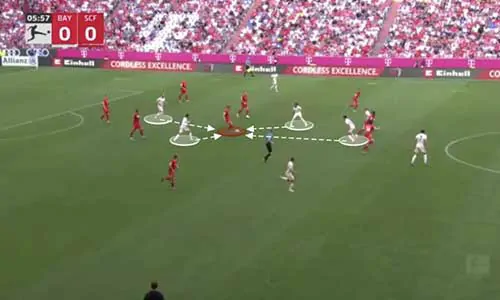
In modern football, tactical systems have evolved significantly, but few have reshaped the global game as dramatically as high-pressure defensive structures. If you have watched clubs like Liverpool, Manchester City, or Bayern Munich dominate European football over the last decade, you have witnessed this system in action. To fully understand this tactical phenomenon, we must look at Gegenpressing explained as not just a defensive tactic, but a comprehensive philosophy of transition.
At its core, counter-pressing focuses on winning the ball back immediately after losing possession. Instead of dropping back into a defensive shape, the team that has just lost the ball aggressively swarms the opponent. In this comprehensive guide, you will find Gegenpressing explained in complete detail, covering its origins, tactical frameworks, physical requirements, and the legendary managers who popularized it.
Table of Contents
- 1. What is Gegenpressing? An Overview
- 2. The Historical Roots and Modern Evolution
- 3. The Tactical Framework: How Gegenpressing Works
- 4. The Four Key Modes of Counter-Pressing
- 5. Iconic Managers Who Refined the Philosophy
- 6. Strengths and Weaknesses of Gegenpressing Explained
- 7. Comparing Gegenpressing with Traditional Defensive Systems
- 8. How to Implement Gegenpressing: Key Training Drills
- 9. FAQs about Gegenpressing Explained
1. What is Gegenpressing? An Overview
The term “Gegenpressing” translates literally from German as “counter-pressing.” In traditional football tactics, when a team loses the ball, the instinctive reaction is to retreat, drop into a compact defensive block, and protect the goal. Conversely, Gegenpressing completely flips this mentality on its head.
When a team employs this strategy, the moment of transition—known in German as the *Umschaltmoment*—becomes their primary attacking trigger. Instead of retreating, the players closest to the ball immediately swarm the opponent who has just recovered it. The objective is simple: exploit the temporary chaos before the opponent can establish a secure possession structure.
To have Gegenpressing explained in its simplest form, it is the act of defending by attacking. When an opponent wins the ball, they are forced to transition mentally from defending to attacking. During those brief seconds, their players begin to expand across the pitch to create passing lanes. By striking at this exact moment of expansion, the pressing team catches the opponent at their most disorganized and vulnerable state.
2. The Historical Roots and Modern Evolution
While Gegenpressing is highly associated with modern German coaching, its roots stretch back several decades. The foundational concepts of pressing as a collective unit can be traced to the Dutch “Total Football” era of the 1970s, pioneered by Rinus Michels and Ernst Happel. Happel’s Feyenoord team, which won the European Cup in 1970, demonstrated early versions of high-intensity recovery tactics.
In addition, Valeriy Lobanovskyi’s Dynamo Kyiv in the 1980s integrated scientific data and high-intensity physical conditioning to squeeze space on the pitch. Arrigo Sacchi’s legendary AC Milan side of the late 1980s further refined these ideas, emphasizing a strict 25-meter distance between the defensive and attacking lines to suffocate opposing build-up play.
Ralf Rangnick: The Godfather of Gegenpressing Explained
In Germany, the modernization of this concept belongs to Ralf Rangnick. In 1998, during a famous appearance on German television, Rangnick outlined the mechanics of “ball-oriented pressing” using a magnetic tactics board. This tactical shift went against the traditional German sweeper system, laying the groundwork for a football revolution in the Bundesliga.
Rangnick’s philosophy was built on speed and spatial dominance. He famously popularized the “8-second rule” (recovering the ball within eight seconds of losing it) and the “10-second rule” (creating a shot on goal within ten seconds of regaining possession). When studying how the system evolved, we often find Gegenpressing explained as a strictly physical system, but Rangnick proved it was deeply cognitive and structural.
3. The Tactical Framework: How Gegenpressing Works
To successfully execute this strategy, a team must behave like a single, synchronized organism. If even one player fails to press or cover their designated zone, the entire structure can collapse, leaving massive gaps for the opponent to exploit. Therefore, understanding the structural prerequisites is vital.
First and foremost, the foundation of a great counter-press actually begins when a team is still *in* possession of the ball. This is known as “rest defense” (*Restverteidigung*). If a team is too spread out while attacking, they will be too far apart to pressure the ball effectively when they lose it. Therefore, maintaining short distances between players during build-up play is non-negotiable.
When we look at the mechanics of Gegenpressing explained by top tactical analysts, the concept of a high defensive line is central. The defenders must push up toward the halfway line, compressing the playable space. This forces the opponent into a tight area, making it highly difficult for them to find an easy exit pass.
Furthermore, players must identify clear “pressing triggers.” These are specific on-field scenarios that signal the entire unit to hunt the ball. Common triggers include:
- An opponent receiving the ball with their back to goal.
- A loose, heavy touch by an opposing player.
- A slow or inaccurate pass across the backline.
- An opponent trapped near the touchline with limited passing angles.
4. The Four Key Modes of Counter-Pressing
While the overall objective remains consistent, different teams execute the strategy in different ways. Tactical experts categorize counter-pressing into four distinct variations, each relying on different spatial triggers and positioning.
A. Man-Oriented Counter-Pressing
In this system, the moment possession is lost, every player immediately tightens up to mark the closest opponent. This prevents the ball carrier from finding an easy outlet, forcing them into a high-risk 1v1 duel or a rushed clearance. It requires exceptional individual defensive awareness and physical dominance.
B. Ball-Oriented Counter-Pressing
Here, the players do not focus on marking specific opponents. Instead, they swarm the ball itself. Multiple players converge on the ball carrier from different angles, completely blocking their view and suffocating their space. This is highly intense and relies on overwhelming numerical superiority in the immediate vicinity of the ball.
C. Space-Oriented Counter-Pressing
In this variation, the pressing team focuses on closing down the immediate zone around the ball. Players occupy the surrounding space to cut off short passing options without necessarily committing to a hard man-to-man mark. It is a highly calculated approach designed to trap the opponent in a congested area.
D. Passing-Lane-Oriented Counter-Pressing
Rather than rushing the ball carrier directly, players position themselves in the lanes between the ball and potential target receivers. The goal is to tempt the ball carrier into attempting a pass, only for it to be easily intercepted. To have the tactical diversity of Gegenpressing explained, we must differentiate between these four methods to appreciate how coaches tailor the system to their squad’s strengths.
5. Iconic Managers Who Refined the Philosophy
The modern era of football has been defined by elite coaches who have customized high-pressure tactics to fit their tactical DNA. The two most prominent figures are Jürgen Klopp and Pep Guardiola.
Jürgen Klopp brought his high-octane “heavy metal” football to global prominence at Borussia Dortmund and later perfected it at Liverpool. Klopp famously remarked that *”no playmaker in the world can be as good as a good counter-pressing situation.”* Within Klopp’s framework, you often see Gegenpressing explained as the primary creative tool. By winning the ball deep in the opponent’s half, his teams immediately find themselves in prime attacking positions, bypassing the need for slow, patient build-up play.
On the other hand, Pep Guardiola integrated high-pressure recovery into his possession-oriented style, commonly referred to as *Juego de Posición* (Positional Play). Guardiola’s teams utilize the “five-second rule.” If they cannot win the ball back within five seconds of losing it, they drop back into a structured mid-block to protect their defensive lines. This is where we see Gegenpressing explained not as an emotional sprint, but as a calculated mechanism designed to sustain high possession percentages and prevent counter-attacks.
6. Strengths and Weaknesses of Gegenpressing Explained
Like any tactical system, Gegenpressing is not a perfect solution. It offers immense advantages, but it also carries significant risks that elite opponents can exploit.
The Advantages
By having the strategic advantages of Gegenpressing explained, coaches can better understand its popularity. First, it allows a team to dominate transition moments, turning a defensive action into a direct goalscoring opportunity. Second, it keeps the opponent pinned deep in their own half, reducing their offensive threat. Finally, it creates immense psychological pressure, forcing opposing defenders into making critical unforced errors under relentless stress.
The Vulnerabilities
In tactical courses, we often see Gegenpressing explained alongside its fatal vulnerabilities. The most obvious risk is the space left behind the high defensive line. If the initial press is bypassed by a highly technical opponent or a precise long ball, the defending team is highly exposed to a rapid counter-attack. Additionally, the physical demands of this style are incredibly high, often leading to player fatigue, muscle injuries, and late-game drop-offs in performance if a squad lacks adequate depth.
7. Comparing Gegenpressing with Traditional Defensive Systems
To highlight the unique nature of this high-pressure strategy, the table below compares Gegenpressing with other common defensive structures used in elite football.
| Defensive System | Primary Objective | Defensive Line Height | Physical Intensity | Risk Level |
|---|---|---|---|---|
| Gegenpressing (Counter-Pressing) | Immediate ball recovery at transition point | Very High (Near halfway line) | Extremely High | High (Vulnerable to long balls) |
| Mid-Block Pressing | Intercepting passes in the middle third | Medium (Central zones) | Moderate | Medium |
| Low Block (Catenaccio Style) | Denying space in the penalty box | Low (Deep in own half) | Low to Moderate | Low (Relies on defensive discipline) |
8. How to Implement Gegenpressing: Key Training Drills
Transitioning from understanding the theory to executing it on the pitch requires systematic coaching. When we look at how coaches want Gegenpressing explained to their squad, they turn to specific tactical frameworks and practical training templates.
Drill 1: The Transition Rondo (6v2 or 8v2)
A classic exercise to teach transition reflexes. In a confined grid, the attacking players maintain possession with short passes. Two defenders work to intercept the ball. The moment a defender wins the ball, the attacking players must immediately switch roles and press the defender before they can pass the ball out of the grid or keep possession for more than two touches.
Drill 2: The 4v4 + 3 Positional Transition Game
This drill emphasizes space-oriented counter-pressing. Played in a medium-sized grid, three neutral players support whichever team has the ball. Because the attacking team has a heavy numerical advantage (7v4), they are naturally spread out. When the defensive team of four wins the ball, the attacking team must rapidly compress their shape to win it back, training both rest defense and immediate defensive transitions.
9. FAQs about Gegenpressing Explained
What does the term “Gegenpressing” actually mean?
Gegenpressing is a German word that translates to “counter-pressing.” As we have Gegenpressing explained in previous sections, the primary goal of this strategy is to pressure the opponent to win the ball back immediately after losing possession, rather than retreating into a defensive shape.
Who invented Gegenpressing?
No single person invented it. It evolved from Dutch Total Football in the 1970s and Valeriy Lobanovskyi’s Dynamo Kyiv in the 1980s. However, Ralf Rangnick modernized and popularized the system in Germany, while Jürgen Klopp brought it to global mainstream prominence.
What is the difference between regular pressing and Gegenpressing?
Regular pressing can happen at any phase of play, even when the opponent has established structured possession. Gegenpressing is highly specific to the transition phase; it is the immediate act of pressing the moment you lose the ball, aiming to exploit the opponent’s momentary disorganization.
Is Gegenpressing physically sustainable over an entire season?
It is highly demanding. When analyzing the long-term effects of this style, you will find Gegenpressing explained as a high-reward but high-fatigue system. To sustain it, modern managers must use squad rotation, highly advanced physical conditioning, and optimize their possession phases to rest while on the ball.
How do you counter or play against a counter-pressing team?
The most effective way to beat a counter-pressing team is through quick, precise, one-touch passing to escape the initial trap, or by playing direct, diagonal long balls into the spaces left vacant behind their high defensive line.
What is the “5-second rule” in counter-pressing?
Popularized by Pep Guardiola, the five-second rule states that when a team loses the ball, they have exactly five seconds of high-intensity sprinting to recover it. If they cannot win it back within that window, they must immediately transition into a structured defensive shape to avoid being bypassed.
Conclusion
In conclusion, Gegenpressing is far more than an aggressive run toward the ball; it is a highly structured, intellectually demanding tactical philosophy. By exploiting the vulnerable transition phase, teams can turn defensive recovery into their most potent offensive weapon. With Gegenpressing explained, it becomes clear that football is no longer just about attacking and defending as isolated phases, but about dominating the chaotic spaces in between.
How do you think high-pressure tactics will continue to evolve in modern football? Let us know your thoughts in the comments below, and feel free to share this tactical guide with your fellow football fans!