Offside Rule Explained: A Beginner’s Guide to Football’s Most Confusing Law
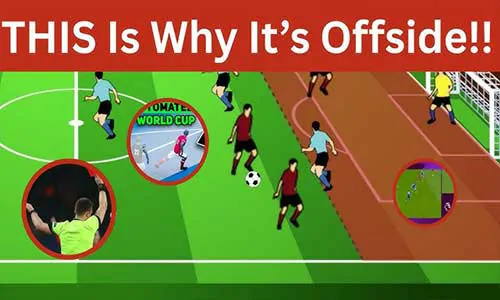
Football is loved globally for its simplicity, fast pace, and moments of brilliance. However, as anticipation builds for the historic FIFA World Cup 2026, many new fans find themselves puzzled by one particular regulation: the offside rule. Known formally as Law 11 of the Laws of the Game, it is arguably the most debated and misunderstood rule in sports. Understanding the offside rule ahead of the FIFA World Cup 2026 will completely change how you view the beautiful game, transforming confusing referee whistles into moments of tactical clarity.
This comprehensive beginner’s guide breaks down the rule in simple terms, analyzes the nuances of active vs. passive play, explores how modern technology affects decisions, and prepares you to analyze matches like a seasoned professional.
Table of Contents
- Why Understanding the Offside Rule is Crucial for the FIFA World Cup 2026
- The Core Mechanics: What is the Offside Position?
- The “Second-Last Opponent” Concept Explained
- Active Offside vs. Passive Offside
- Exceptions to the Offside Rule
- The Evolution of Law 11: From Rugby Roots to the Wenger Law
- Technology and the Offside Rule in Modern Football
- Tactical Battles: How Managers Manipulate the Offside Rule
- Common Misconceptions About the Offside Rule
- Conclusion: Get Ready for the FIFA World Cup 2026
Why Understanding the Offside Rule is Crucial for the FIFA World Cup 2026
With the FIFA World Cup 2026 expanding to a massive 48-team format, the tournament is set to attract billions of viewers worldwide, including millions of casual fans. At this level of competition, the margins between victory and defeat are incredibly thin. A single offside call can disallow a tournament-winning goal or award a crucial free-kick that changes the entire momentum of a knockout match.
Furthermore, tactical decisions made during the FIFA World Cup 2026 will rely heavily on defensive structures designed to catch speedy attackers offside. Understanding how and why these calls are made allows you to appreciate the tactical chess match taking place on the pitch, rather than feeling frustrated by sudden stops in play.
The Core Mechanics: What is the Offside Position?
Before diving into the complexities of the offence, it is vital to understand what constitutes an “offside position.” Simply being in an offside position is not an offence in itself. A player is in an offside position if they meet three specific conditions simultaneously:
- They are in the opponent’s half of the pitch.
- They are closer to the opponent’s goal line than the ball.
- They are closer to the opponent’s goal line than the second-last opponent (including the goalkeeper).
In simpler terms, if an attacking player is standing behind the last defending outfield player when a teammate passes the ball forward, they are likely in an offside position. It is important to note that any part of the head, torso, or legs can place a player offside. Hands and arms, however, are not counted because they cannot legally be used to play the ball.
The “Second-Last Opponent” Concept Explained
New fans often assume the offside rule is determined by the last outfield defender. In reality, the rule specifies the “second-last opponent.” In 99% of match situations, the goalkeeper is the last opponent, standing closest to the goal line. Therefore, the second-last opponent is indeed the last defending outfield player.
However, if the goalkeeper runs out of their penalty box to clear a ball and leaves an outfield defender behind them, that defender becomes the last opponent. Consequently, any attacker must have at least one other outfield player between themselves and the goal line to remain onside. This rare but chaotic scenario regularly creates confusion during major tournaments.
Active Offside vs. Passive Offside
As clarified by the International Football Association Board (IFAB) Law 11, a player standing in an offside position is only penalized if they become actively involved in the play at the exact moment the ball is touched or played by a teammate. If they do not participate, they are considered “passively offside,” and play continues. There are three ways a player can trigger an active offside offence:
1. Interfering with Play
This occurs when a player receives or touches a ball that has been passed or touched by a teammate. If an attacker is in an offside position when the pass is initiated and runs forward to control the ball, the assistant referee will raise their flag, and the referee will stop play.
2. Interfering with an Opponent
An attacker can be penalized even if they never touch the ball. If their position prevents a defender from playing the ball, blocks the goalkeeper’s line of sight, or involves physically challenging an opponent for possession, they are actively interfering and will be called offside.
3. Gaining an Advantage
If the ball rebounds off the goalpost, crossbar, or an opposing player after a save, and falls to an attacker who was in an offside position when the original shot was taken, that attacker is penalized for gaining an unfair advantage from their illegal position.
Exceptions to the Offside Rule
Even if an attacking player is standing deep inside the opponent’s half with no defenders around, there are specific situations where the offside rule is completely bypassed. These exceptions keep the game flowing and offer unique attacking strategies. You cannot be called offside if you receive the ball directly from a:
- Throw-in: Attackers can stand right next to the opponent’s goal during a throw-in without fear of an offside penalty.
- Corner kick: Because the ball is placed on the corner line, all attackers are technically behind or level with the ball at the moment of the kick.
- Goal kick: A direct pass from a goal kick to an attacker standing deep in the opposing half is completely legal.
Additionally, a player cannot be offside if they receive the ball in their own half of the field, or if the ball is played deliberately backward by a teammate.
Offside Situations at a Glance
| Scenario | Is it Offside? | Reasoning |
|---|---|---|
| Receiving a pass level with the last defender | No | Level is considered onside to encourage attacking football. |
| Receiving a ball directly from a throw-in | No | Throw-ins are an explicit exception in the IFAB rules. |
| Standing offside but not moving toward the ball | No | This is passive offside; play continues unless they interfere. |
| Receiving a ball deflected off a defender’s block | Yes | A deflection is not a deliberate play, meaning the original offside position stands. |
| Receiving a ball deliberately passed backward by a defender | No | A deliberate play by an opponent resets the phase of play. |
The Evolution of Law 11: From Rugby Roots to the Wenger Law
The offside rule was not designed to frustrate fans, but rather to prevent “goal-hanging”—a tactic where attackers would simply stand near the opponent’s goal and wait for a long pass. When the first standardized football rules were established in 1863, the offside rule was incredibly strict, drawing inspiration from rugby. Any attacker ahead of the ball was considered offside.
In 1925, the rule changed from requiring three defenders to only two, which caused an immediate boom in goalscoring. By 1990, the rule was further adjusted to declare that an attacker who was level with the second-last defender was onside. Today, we are seeing further trials, such as Arsène Wenger’s proposed “daylight” offside rule being tested in professional leagues like the Canadian Premier League. This proposal suggests a player is only offside if their entire body is ahead of the defender. While not implemented for the FIFA World Cup 2026, these continuous adjustments show that football rules are always adapting to favor exciting, attacking play.
Technology and the Offside Rule in Modern Football
Historically, offside decisions relied entirely on the human eye. Assistant referees had to look in two directions at once: tracking the exact millisecond the passer kicked the ball, while simultaneously watching the line of the defenders and attackers. Unsurprisingly, human error led to massive controversies.
The introduction of the Video Assistant Referee (VAR) allowed officials to review tight calls using freeze-frames and digital lines drawn on screen. However, this often led to tedious delays, with referees spending minutes measuring a player’s toe or armpit to determine a marginal offside offence.
How Offside Technology Will Shape the FIFA World Cup 2026
At the FIFA World Cup 2026, officials will utilize advanced Semi-Automated Offside Technology (SAOT). This cutting-edge system uses a network of tracking cameras installed beneath the stadium roof alongside a tracking sensor embedded inside the match ball.
By tracking 29 points on each player’s body up to 50 times per second, the technology automatically detects the exact moment the ball is kicked and calculates the relative positions of the players in real-time. This ensures that the FIFA World Cup 2026 maintains high accuracy while drastically reducing the time spent on reviews. Fans watching the FIFA World Cup 2026 will see clear 3D animations on screen detailing exactly why a player was ruled offside, removing much of the mystery surrounding these close calls.
Tactical Battles: How Managers Manipulate the Offside Rule
For elite managers, the offside rule is not just a restriction; it is a tactical weapon. Understanding this allows you to spot complex strategies when watching matches during the FIFA World Cup 2026. Two primary strategies dominate the modern game:
The Offside Trap: This is a defensive tactic where the backline deliberately steps forward in unison just before an opponent passes the ball. By doing so, they suddenly leave the attacking forward standing in an offside position. It requires perfect timing and chemistry; if one defender reacts too slowly, the attacker is left with a clean run on goal.
Running on the Shoulder: Fast forwards specialize in playing “on the shoulder” of the last defender. They position themselves perfectly level with the defender, matching their run step-for-step, and sprint forward the exact millisecond the pass is played. It is a high-risk, high-reward tactic that tests the limits of the offside line.
Common Misconceptions About the Offside Rule
Even seasoned football commentators sometimes make mistakes regarding Law 11. Let’s clear up some of the most common myths:
- “You cannot be offside if you are behind the ball.” This is true! If an attacker is closer to the goal line than the defenders, but a teammate passes the ball backward or sideways to them, they are onside. The position of the ball always overrides the position of the defenders.
- “The goalkeeper is always the offside line.” As discussed earlier, the rule requires two opponents. If the goalkeeper is out of position, outfield defenders take their place in the calculation.
- “A player can be offside in their own half.” Completely false. You must cross the halfway line into the opponent’s territory to trigger an offside position.
Conclusion: Get Ready for the FIFA World Cup 2026
While the offside rule may seem complicated at first glance, breaking it down into its core components—the offside position, active play, and the exceptions—makes it much easier to digest. As football continues to integrate advanced technologies to support the referees, the application of this historic rule will keep evolving.
With the countdown to the FIFA World Cup 2026 well underway, you are now equipped with the tactical knowledge to enjoy the games at a deeper level. Whether you are cheering for your national team or simply enjoying the global spectacle, keeping an eye on the offside line will help you appreciate the incredible athleticism and tactical brilliance of the world’s best players.
What are your thoughts on the use of Semi-Automated Offside Technology in modern football? Do you think it helps keep the game fair, or does it take away from the natural flow? Let us know in the comments below!
Frequently Asked Questions (FAQ)
1. What is the basic offside rule in football?
A player is offside if they are in the opponent’s half and closer to the opponent’s goal line than both the ball and the second-last opponent at the exact moment the ball is passed to them by a teammate.
2. What is the difference between an offside position and an offside offence?
Simply standing in an offside position is not an offence. It only becomes an offence if the player becomes actively involved in the play by touching the ball, blocking an opponent’s view, or gaining an advantage.
3. Will VAR decide every offside call at the FIFA World Cup 2026?
Yes, video assistant referees will monitor all offside situations at the FIFA World Cup 2026. They will be aided by Semi-Automated Offside Technology, which tracks player movements and ball data to make highly rapid and objective assessments.
4. Can you be offside from a throw-in?
No, there is no offside offence if a player receives the ball directly from a throw-in, regardless of where they are standing on the pitch.
5. Does a defender’s deliberate touch play an offside attacker onside?
Yes. If an opponent deliberately plays the ball (such as passing it back or attempting a controlled clearance) and it goes to an attacker in an offside position, the attacker is not penalized, as the defensive play initiates a new phase of the game.
6. What is the “Wenger Law” trial?
The Wenger Law is an experimental offside rule proposed by former Arsenal manager Arsène Wenger. It states that a player is onside as long as any goalscoring part of their body is level with the defender, requiring “daylight” between the attacker and defender to be called offside.