UEFA Away Goals Rule: Why It Was Removed and What Changed
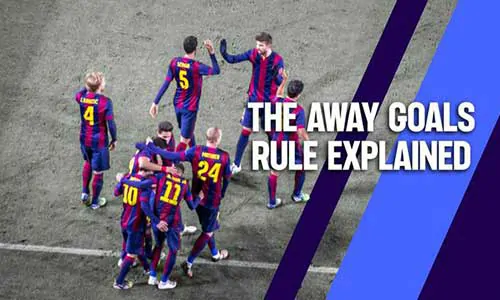
For over five decades, the UEFA Away Goals Rule was one of the most exciting, nerve-wracking, and controversial tiebreakers in international club football. Introduced in the mid-1960s, this rule decided countless high-stakes matches in the UEFA Champions League, Europa League, and Cup Winners’ Cup. A single late strike from a visiting team could instantly turn a two-legged knockout tie on its head, leaving the home fans in absolute silence.
However, in June 2021, European football’s governing body made a historic announcement. The decision was made to completely abolish the UEFA Away Goals Rule across all of its club competitions starting from the 2021/22 season. This major decision fundamentally transformed how knockout stages are played, coached, and experienced by football fans around the globe.
But why did UEFA decide to abandon a rule that had generated some of the most dramatic moments in football history? What statistical changes and tactical shifts prompted this massive reform? In this comprehensive article, we will dive deep into the origins of the rule, the core reasons behind its removal, and how its absence has changed the modern game.
Table of Contents
- What Was the UEFA Away Goals Rule?
- The Origins and History of the UEFA Away Goals Rule
- Why Was the UEFA Away Goals Rule Removed?
- What Changed After the Abolition of the UEFA Away Goals Rule?
- How Have Tactics Shifted Since the Rule Was Scrapped?
- Notable Matches That Defined the Away Goals Era
- What the Data Tells Us Post-Abolition
- Conclusion & Final Thoughts
- Frequently Asked Questions (FAQ)
What Was the UEFA Away Goals Rule?
To fully understand why the rule was abolished, we must first look at how it functioned. In two-legged knockout ties, teams play each other twice: once at home and once away. Under the classic rule, if the aggregate score (the total number of goals scored by both teams across both matches) was tied after 180 minutes, the team that scored more goals away from home was declared the winner.
There was a common football myth that away goals “counted double.” In reality, they did not. Instead, they served as the primary tiebreaker. If Team A won the first leg 2-1 at home, and Team B won the second leg 1-0 in their own stadium, the aggregate score was tied at 2-2. However, Team B would progress because they had scored 1 away goal, whereas Team A had scored none.
If both teams had scored the exact same number of home and away goals (for example, both matches ended 1-1), the game would go into 30 minutes of extra time. If the tie remained unbroken during extra time, a penalty shootout would determine the winner.
The Origins and History of the UEFA Away Goals Rule
The UEFA Away Goals Rule was first introduced during the 1965/66 European Cup Winners’ Cup. Before its implementation, resolving a tied two-legged fixture was incredibly complicated and physically demanding. If teams were tied on aggregate, they had to play a third match on a neutral ground, which was highly expensive and logistically difficult. If that playoff match also ended in a draw, the winner was decided by the flip of a coin.
Recognizing the need for a fairer, more sporty solution, UEFA introduced the away goals tiebreaker. At the time, traveling to away matches in Europe was a massive challenge. Football teams had to endure grueling, multi-day journeys by train, bus, or basic commercial flights to reach foreign countries.
Furthermore, playing in a foreign stadium in the 1960s was an incredibly intimidating experience. Away teams faced highly hostile crowds, unfamiliar pitches, wildly different climates, and completely unstandardized match balls. Consequently, visiting teams almost always set up to “park the bus”—defending deep to secure a scoreless draw or minimize their losses.
The introduction of the UEFA Away Goals Rule was designed to incentivize visiting teams to play more attacking football. By offering a significant reward for scoring away from home, UEFA hoped to make knockout ties more open, dynamic, and entertaining for spectators. For decades, this system worked as intended, creating a unique tactical battleground.
Why Was the UEFA Away Goals Rule Removed?
While the tiebreaker served its purpose during the 20th century, modern football underwent a massive evolution. By the late 2010s, a growing consensus among elite coaches, players, and analysts suggested that the rule was having the exact opposite of its intended effect.
When announcing the decision to abolish the tiebreaker, UEFA President Aleksander Čeferin explained that the impact of the rule had run counter to its original purpose. Let us explore the primary reasons why the UEFA Away Goals Rule was ultimately scrapped.
1. The Erosion of Home Advantage
Historically, playing at home offered a massive advantage. However, statistics compiled by UEFA from the mid-1970s up to 2021 showed a continuous, undeniable reduction in the gap between home and away wins.
The ratio of home-to-away wins in men’s competitions shrank from 61%/19% in the 1970s to 47%/30% in the modern era. Additionally, the average number of goals scored at home dropped from 2.02 to 1.58, while away goals rose from 0.95 to 1.15. Because travel was now highly comfortable, pitches were perfectly standardized, and security inside stadiums had improved, the extreme difficulties of playing away from home had largely vanished.
2. Promoting Negative Football at Home
Perhaps the most significant criticism was that the UEFA Away Goals Rule discouraged home teams from attacking in the first leg. Managers of home teams were highly terrified of conceding an away goal, knowing it carried massive weight.
As a result, first legs of knockout ties frequently became dull, overly defensive affairs. Home teams preferred to play for a cautious 0-0 draw rather than risk attacking and getting caught on the counter-attack. The fear of conceding a heavily weighted away goal essentially stifled the creative, attacking spirit of the home side.
3. The Injustice of Extra Time
Another major flaw in the rule’s logic became apparent when matches went into extra time during the second leg. If the home team in the second leg conceded a goal during the 30-minute extra-time period, they were forced to score twice to progress.
This gave the visiting team a highly unfair advantage. They had an extra 30 minutes of play on foreign turf to score a “weighted” goal that the home team could not match, simply because the first leg had already concluded without extra time. This structural inequality was a major talking point among club managers, who repeatedly urged UEFA to fix the discrepancy.
What Changed After the Abolition of the UEFA Away Goals Rule?
Following the abolition, the method of resolving tied knockout fixtures was simplified dramatically. Today, all goals are treated equally, regardless of where they are scored.
If the aggregate score is level at the end of normal playing time in the second leg, the match immediately goes to extra time. This consists of two 15-minute halves. If the score remains tied after those 30 minutes, the winner is decided by a penalty shootout.
To put this into perspective, let’s look at how a hypothetical match would be settled under both the old and new systems:
| Match Scenario | Under the Old Rule (Pre-2021) | Under the New Rule (Post-2021) |
|---|---|---|
| First Leg: Team A (Home) 1 – 2 Team B (Away) Second Leg: Team B (Home) 0 – 1 Team A (Away) |
Team B Wins. Aggregate is 2-2. Team B scored 2 away goals, whereas Team A only scored 1. | Tie is Level (2-2). The match goes to extra time, followed by penalties if still tied. |
| First Leg: Team A (Home) 0 – 0 Team B (Away) Second Leg: Team B (Home) 1 – 1 Team A (Away) |
Team A Wins. Aggregate is 1-1. Team A scored 1 away goal, while Team B scored none at Team A’s home. | Tie is Level (1-1). The match goes to extra time, followed by penalties if still tied. |
| Extra Time in 2nd Leg: Tied at 1-1. Both teams score 1 goal in extra time (ending 2-2). | Away Team Wins immediately because of the away goal scored during extra time. | Tie remains level. The match proceeds directly to a penalty shootout. |
The removal of the UEFA Away Goals Rule also impacted the group stage tiebreaker criteria. Previously, away goals scored in head-to-head matches were used to separate teams finishing on equal points in the group standings. Now, aggregate head-to-head goal difference is used first, without giving extra weight to away goals.
How Have Tactics Shifted Since the Rule Was Scrapped?
The abolition of this long-standing rule has changed the tactical preparation of elite European managers. Under the old system, managing a two-legged tie was akin to playing a complex game of chess, where conceding a single goal at home could ruin an entire campaign.
Now that the UEFA Away Goals Rule has been tossed aside, we are seeing several clear tactical trends emerge in modern European knockout matches:
-
- More Attacking First Legs: Home teams are no longer terrified of conceding a goal in the first leg. They can play with higher intensity, press further up the pitch, and commit more players forward, knowing that a 2-1 or 3-2 victory is far more valuable than a cautious 0-0 draw.
- Late-Game Drama: In the past, if a visiting team was losing 2-0 but managed to score a late goal to make it 2-1, the tie was almost completely resolved in their favor due to the away goals advantage. Now, that late goal simply reduces the deficit, forcing both teams to continue fighting on equal terms.
- Less Defensive Stalling: Visiting teams in the first leg can no longer rely on scoring a single away goal and then parking the bus for the rest of the tie. They must play to win the match on merit.
These shifts have generally led to more open, entertaining, and high-scoring knockout fixtures. Both legs of a tie are now played with a clear focus on outscoring the opponent, rather than relying on complex math and defensive preservation.
Notable Matches That Defined the Away Goals Era
While the rule was eventually discarded, it was responsible for some of the most dramatic, iconic, and heartbreaking moments in the history of European football. Let’s look back at three legendary matches that were defined by the UEFA Away Goals Rule:
1. Barcelona vs. Roma (2018 Champions League Quarter-Finals)
In the first leg at the Camp Nou, Barcelona secured a dominant 4-1 victory, seemingly booking their place in the semi-finals. However, Edin Džeko’s late away goal for Roma in Spain proved to be crucial. In the return leg at the Stadio Olimpico, Roma played a breathtaking match, winning 3-0. The aggregate score was tied at 4-4, but Roma progressed to the semi-finals because of that single, vital away goal scored in Barcelona.
2. Ajax vs. Tottenham Hotspur (2019 Champions League Semi-Finals)
After losing 1-0 at home in London, Tottenham traveled to Amsterdam facing a massive challenge. Ajax quickly took a 2-0 lead in the second leg, making the aggregate score 3-0. Tottenham needed a miracle, and Lucas Moura delivered it by scoring a stunning second-half hat-trick. His final goal in the 96th minute made the score on the night 3-2 to Spurs. Although the aggregate score was tied at 3-3, Tottenham advanced to their first-ever Champions League final because they scored three goals away from home.
3. Chelsea vs. Paris Saint-Germain (2015 Champions League Round of 16)
After a 1-1 draw in Paris, the second leg at Stamford Bridge went into extra time after finishing 1-1 in normal time. PSG was down to 10 men after Zlatan Ibrahimović was sent off early. Eden Hazard scored a penalty in extra time to put Chelsea ahead 2-1 on the night (3-2 on aggregate). However, PSG’s Thiago Silva scored a looping header in the 114th minute to make it 2-2 on the night. Even though the aggregate score was tied 3-3, PSG advanced because of their two away goals, illustrating the immense power of the away goal in extra time.
What the Data Tells Us Post-Abolition
Since the 2021/22 season, sports analytics firms and football researchers have closely monitored the impact of removing the rule. While some fans feared that matches would become more boring or head to penalty shootouts too frequently, the actual data suggests a highly positive trend.
According to academic studies analyzing the UEFA Champions League post-abolition, the removal of the UEFA Away Goals Rule has contributed to:
-
-
- An Increase in Overall Goals: Knockout matches have seen a statistical increase in the average number of goals scored per game, as teams play more proactively.
- Fewer “Dead” Segments of Play: The middle portions of second-leg ties are far more active, as teams no longer feel comfortable holding onto a narrow, math-based lead.
- An Increase in Extra Time and Penalties: As expected, more ties are ending in true aggregate draws, leading to an increase in dramatic extra-time periods and penalty shootouts. This has added a different layer of late-match tension that fans highly appreciate.
-
Conclusion & Final Thoughts
The decision to phase out the UEFA Away Goals Rule marked the end of an era for European football. While the rule provided decades of unbelievable drama and unforgettable memories, it had ultimately outlived its sporting purpose. The modern landscape of football—with its elite travel conditions, standardized facilities, and tactical advancements—no longer justified giving double weight to away goals.
By treating all goals equally, UEFA has simplified the sport, eliminated tactical passivity, and put the focus back on pure, attacking football. Knockout matches are now decided by which team scores more goals over 180 minutes, rather than who can navigate a complex mathematical tiebreaker.
What do you think of this rule change? Do you prefer the pure drama of extra time and penalty shootouts, or do you miss the unique tactical tension of the away goals rule? Let us know your thoughts in the comments below, and share this article with your fellow football fans!
Frequently Asked Questions (FAQ)
1. What was the UEFA Away Goals Rule?
The UEFA Away Goals Rule was a tiebreaking method used in two-legged knockout matches. If the aggregate score was tied after both games, the team that scored more goals away from home was declared the winner.
2. When did UEFA officially scrap the UEFA Away Goals Rule?
UEFA officially abolished the rule in June 2021. The change took effect starting with the qualifying phases of the 2021/22 club competition season.
3. Why did coaches want the UEFA Away Goals Rule removed?
Many elite coaches felt the rule put home teams at an unfair disadvantage in the first leg. Home teams often played highly defensive, cautious football to avoid conceding a heavily weighted away goal, which ruined the entertainment value of the matches.
4. What happens now if a UEFA Champions League tie is tied on aggregate?
If the aggregate score is level at the end of the second leg, the match goes into 30 minutes of extra time (two 15-minute halves). If the score is still tied after extra time, the winner is decided by a penalty shootout.
5. Does the away goals rule still exist in extra time?
No, the away goals rule has been completely removed from all parts of UEFA club competitions, including extra time. Away goals no longer carry any additional weight under any circumstances.
6. Which competitions were affected by this rule change?
The rule change applies to all men’s, women’s, and youth UEFA club competitions, including the UEFA Champions League, UEFA Europa League, UEFA Europa Conference League, and the UEFA Women’s Champions League.