BMO Field World Cup 2026 Upgrades: How Toronto Is Preparing for FIFA
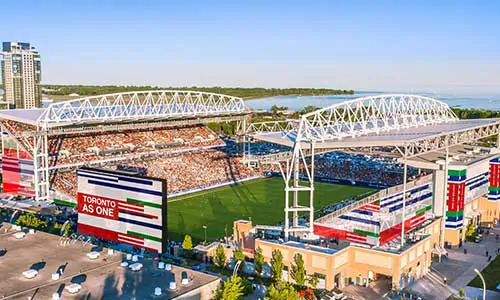
The global sports stage is set, and the excitement in Canada’s largest metropolis is palpable. As football fans worldwide count down the days to the kick-off, Toronto is putting the final touches on a massive, multi-million-dollar transformation of its iconic waterfront stadium. Toronto is incredibly excited to host the FIFA World Cup 2026, bringing the biggest sporting event on the planet to Canadian soil for the very first time. With the national team’s highly anticipated opening match on June 12 against Bosnia and Herzegovina rapidly approaching, the preparation for the FIFA World Cup 2026 is nearly complete, bringing major renovations to BMO Field—temporarily renamed Toronto Stadium for the duration of the tournament.
Preparing a mid-sized Major League Soccer (MLS) stadium to meet the strict, world-class standards of world football’s governing body is no small feat. From structural expansions to digital overhauls, the City of Toronto, alongside Maple Leaf Sports & Entertainment (MLSE), has invested over $146 million to ready the venue. This comprehensive guide dives deep into the extensive upgrades, the engineering marvel behind the temporary seating, the high-tech pitch installation, and the strategic planning involved in welcoming hundreds of thousands of international visitors to the beautiful shores of Lake Ontario.
Table of Contents
- 1. Why BMO Field is “Toronto Stadium” for the FIFA World Cup 2026
- 2. How Toronto Stadium Meets FIFA World Cup 2026 Capacity Standards
- 3. Upgrading the Playing Surface: The Hybrid Grass Evolution
- 4. Digital and Broadcast Innovations: A Next-Gen Control Room
- 5. Enhancing the Fan Experience for the FIFA World Cup 2026
- 6. City-Wide Infrastructure, Transit, and Liberty Village Integration
- 7. Official Toronto Stadium World Cup Match Schedule
- 8. The Legacy of the FIFA World Cup 2026 on Toronto’s Soccer Infrastructure
- 9. Frequently Asked Questions (FAQ)
1. Why BMO Field is “Toronto Stadium” for the FIFA World Cup 2026
For local sports fans, the beloved venue at Exhibition Place will always be known as BMO Field. However, if you look at official schedules, ticketing platforms, or international television broadcasts, you will notice it is referred to exclusively as “Toronto Stadium.” This change is due to a strict commercial policy enforced by the tournament’s governing body.
Under these strict regulations, stadiums hosting matches cannot use corporate-sponsored names unless those companies are official global partners of the tournament. Since the Bank of Montreal (BMO) is not an official global sponsor of the tournament, the venue must temporarily drop its commercial name. Consequently, “Toronto Stadium” was selected to represent the city on the global stage. This rebranding represents the strict brand identity guidelines for the FIFA World Cup 2026.
This transition requires the physical removal or covering of all BMO-related signs and branding across the entire stadium perimeter. This creates a “clean site” that allows official global sponsors to showcase their branding seamlessly. Despite the temporary name change, the core identity of the stadium remains rooted in Toronto’s rich soccer history. Originally opened in 2007 as Canada’s first soccer-specific stadium, BMO Field has undergone several evolutions to prepare for this historic moment.
Over the past two decades, the venue has hosted major sporting events like the MLS Cup, the Grey Cup, and the NHL Centennial Classic. However, preparing for the world’s most-watched tournament required a transformation on an entirely different scale. The renovations touch every single corner of the facility, transforming it into a world-class arena capable of hosting the best athletes on Earth.
2. How Toronto Stadium Meets FIFA World Cup 2026 Capacity Standards
The most pressing challenge Toronto faced when selected as a host city was stadium capacity. While BMO Field comfortably hosts around 30,000 spectators for Toronto FC matches, the minimum capacity requirement to host a group-stage match is 45,000. To close this gap, engineers designed an ambitious structural expansion program to meet the minimum seating criteria of the FIFA World Cup 2026.
The cornerstone of this project is the installation of 17,756 temporary seats, bringing the total tournament capacity to an impressive 45,736. This massive engineering undertaking was split between the north and south grandstands. The north end received approximately 10,000 temporary seats, while the south end added another 7,000. These soaring, temporary steel structures have completely changed the look of the stadium, wrapping the pitch in a tight, intimidating bowl designed to keep the crowd’s energy focused directly on the pitch.
To ensure these massive structures were completely safe and ready for the global spotlight, the city conducted a real-world test event. On May 9, 2026, Toronto FC hosted Inter Miami CF, featuring Lionel Messi, in front of a record-breaking crowd of 44,828 spectators. This event was a vital milestone on Toronto’s road to the FIFA World Cup 2026.
The event served as a highly successful dress rehearsal for local organizers. The temporary stands performed beautifully under full capacity, giving local organizers and structural engineers the confidence that the stadium can comfortably and safely handle the massive crowds expected throughout the tournament. Additionally, the test event allowed staff to fine-tune ingress and egress procedures, ensuring that fans can enter and exit the newly expanded stands safely and efficiently.
3. Upgrading the Playing Surface: The Hybrid Grass Evolution
A world-class match demands a world-class playing surface. Historically, BMO Field has used a variety of surfaces, starting with artificial FieldTurf in 2007, transitioning to natural Kentucky bluegrass in 2010, and eventually adopting a state-of-the-art hybrid grass system in 2019. However, the sheer wear-and-tear of hosting multiple sports, combined with Toronto’s unpredictable spring weather, meant the pitch required a complete overhaul to meet the rigorous turf guidelines set for the FIFA World Cup 2026.
For the tournament, the entire playing surface has been replaced with a freshly cultivated, elite hybrid grass pitch. This system combines natural grass with millions of synthetic reinforcing fibers injected deep into the root zone. This advanced technology ensures the turf remains incredibly durable, retains its structure under heavy traction, and prevents the divots and tears that can lead to player injuries, making the surface ideal for the FIFA World Cup 2026 matches.
In addition to the composition of the grass, the physical dimensions of the field had to be adjusted. While MLS and CFL configurations are highly adaptable, international matches require a strict field size of exactly 105 meters by 68 meters. To accommodate this, the stadium’s sidelines were widened, which required removing several rows of seats on the east and west sides. Additionally, the modern player dugouts were completely reconstructed and repositioned below field level.
The underground heating and drainage systems were also upgraded. Toronto’s climate can be highly unpredictable, and sudden summer downpours can severely impact a match. The newly upgraded drainage system can siphon off thousands of gallons of water per minute, ensuring the ball rolls smoothly and safely regardless of weather conditions. This high-performance turf management system ensures that players from every nation can perform at their absolute best on a consistent, pristine surface.
4. Digital and Broadcast Innovations: A Next-Gen Control Room
With an estimated global television audience of several billion people, the broadcast capabilities of Toronto Stadium had to be dramatically modernized. The City of Toronto and MLSE allocated a significant portion of the $146 million budget to completely overhaul the venue’s media, digital, and communication infrastructure to meet the extensive global media demands of the FIFA World Cup 2026.
One of the most noticeable improvements for fans in the stadium is the installation of four brand-new, high-definition LED corner videoboards. These massive screens replace the older, single-screen configuration, ensuring that every fan—regardless of where they are seated in the newly expanded grandstands—has an unobstructed, crystal-clear view of replays, VAR decisions, and match statistics. The positioning of these screens also helps to distribute visual information evenly, reducing neck strain for spectators in the lower bowls.
Behind the scenes, engineers have built a newly expanded video production control room. This high-tech hub is equipped to handle dozens of broadcast feeds simultaneously, feeding international networks with ultra-high-definition signals. Additionally, the stadium’s underlying technology infrastructure received a major upgrade, including:
- Upgraded Public Wi-Fi: Next-generation access points have been installed throughout the concourses and seating bowls, allowing thousands of fans to share their experiences in real-time without network congestion.
- Modernized Sound System: A brand-new acoustic array ensures crystal-clear announcements and highly immersive stadium audio.
- High-Efficiency LED Sports Lighting: New broadcast-quality field lighting has been installed to meet strict international standards for slow-motion replays and night-time high-definition television broadcasts.
These technological enhancements do not just serve the immediate needs of the broadcasters; they completely modernize the venue for the future. The fiber-optic cabling running throughout the stadium has been upgraded to support massive data transfer rates. This ensures that media professionals from across the globe can transmit high-definition photos, videos, and articles to their respective countries in seconds, putting Toronto on the map as a leading tech-enabled sports hub.
5. Enhancing the Fan Experience for the FIFA World Cup 2026
While structural safety and high-tech pitches are crucial, the fan experience on the concourse is what turns a match into an unforgettable event. Providing top-tier amenities is a crucial component of the fan experience during the FIFA World Cup 2026. Toronto Stadium’s upgrades place a massive emphasis on premium hospitality and concession efficiency to manage the massive influx of international visitors.
To cater to international dignitaries, football representatives, and premium ticket holders, the stadium has introduced 32 brand-new, ultra-luxury suites. Additionally, a beautiful new premium lounge has been constructed, offering an upscale dining and viewing experience. Over 4,000 premium hospitality seats have been added to the stadium’s inventory, ensuring the city can offer top-tier hospitality packages that match those of the world’s most iconic arenas.
For the general public, the upgrades focus on speed, accessibility, and culinary variety. Managing food logistics is a major focus for organizers of the FIFA World Cup 2026 in Toronto. A massive new stadium kitchen has been constructed, designed to handle the logistical challenge of feeding up to 45,000 fans in a highly condensed time window. Culinary teams have developed a spectacular rotation of 140 to 180 distinct menu items, celebrating Toronto’s famous multicultural food scene.
Furthermore, many concession stands have been upgraded with advanced self-serve technology, allowing fans to order, pay, and collect food and beverages rapidly. This minimizes queue times during halftime and keeps the focus where it belongs—on the pitch. Accessibility has also been prioritized, with new ramps, wider concourses, and dedicated seating areas for fans with mobility challenges, ensuring that the tournament is inclusive and enjoyable for everyone.
6. City-Wide Infrastructure, Transit, and Liberty Village Integration
Hosting a major international tournament is as much about city logistics as it is about what happens inside the stadium. With over 300,000 out-of-town visitors expected to descend on Toronto, city planners, in coordination with the Toronto Transit Commission (TTC), Metrolinx, and the Ministry of Transportation, have designed a strict “public transit-first” strategy, specifically tailored for handling transit logistics for the FIFA World Cup 2026.
Toronto Stadium is uniquely located at Exhibition Place on the Lake Ontario waterfront. This location is highly advantageous as it features a dedicated GO Transit train station (Exhibition GO) and is directly serviced by multiple TTC streetcar routes. City officials are strongly urging all ticket holders to leave their cars behind and utilize public transit. An efficient transit plan is essential to managing crowds during the FIFA World Cup 2026.
Special train and streetcar shuttle services will run continuously from Union Station directly to the stadium, ensuring a smooth, continuous flow of spectators. To make travel even easier, match tickets will include transit fares on the day of the game, encouraging fans to take advantage of the city’s robust transit network. This approach also aligns with Toronto’s sustainability goals, reducing the carbon footprint associated with the event.
Beyond the transit lines, the neighborhood surrounding the stadium is preparing for a historic month. Liberty Village, located just north of the stadium across the rail corridor, is widely recognized as Toronto’s premier soccer neighborhood. Local bars, restaurants, and cafes are expanding their patio spaces and preparing for massive watch parties. For fans looking to enjoy the beautiful June weather, scenic waterfront walking and cycling trails offer a relaxed, active route directly to the stadium gates, showcasing Toronto’s beautiful lakeside geography.
7. Official Toronto Stadium World Cup Match Schedule
Toronto Stadium is scheduled to host six highly anticipated matches during the tournament. These fixtures include five group-stage matches—highlighted by the historic opening match for the Canadian Men’s National Team—and one high-stakes Round of 32 knockout fixture. Below is the detailed match schedule, representing the official match schedule for Toronto’s portion of the FIFA World Cup 2026:
| Date | Stage | Fixture / Matchup |
|---|---|---|
| June 12, 2026 | Group Stage (Group B) | Canada vs. Bosnia and Herzegovina |
| June 17, 2026 | Group Stage (Group L) | Ghana vs. Panama |
| June 20, 2026 | Group Stage (Group E) | Germany vs. Côte d’Ivoire |
| June 23, 2026 | Group Stage (Group H) | Match 53 |
| June 26, 2026 | Group Stage (Group C) | Match 71 |
| July 2, 2026 | Round of 32 | Match 88 (Knockout Stage) |
8. The Legacy of the FIFA World Cup 2026 on Toronto’s Soccer Infrastructure
One of the most common criticisms of hosting massive international sporting events is the issue of “white elephants”—large, expensive stadiums built for a single event that sit empty and unused once the tournament ends. Toronto and MLSE have carefully planned the stadium renovations to completely avoid this trap, focusing on ensuring a positive long-term impact from the FIFA World Cup 2026.
Because the vast majority of the 17,756 extra seats are temporary, they will be safely disassembled and recycled after the final match on July 2. This allows Toronto Stadium to revert to its highly functional, intimate 30,000-seat capacity, which is ideal for Toronto FC MLS matches and Toronto Argonauts CFL games. However, several incredibly valuable upgrades will remain permanent legacy features for the city, showing the lasting legacy of the FIFA World Cup 2026 on Toronto’s Soccer Infrastructure.
Chief among these is the brand-new, permanent 1,000-seat patio and premium lounge complex constructed at the north end of the stadium. This highly modern space will serve as a premier hospitality zone for years to come, giving local sports fans a fantastic, world-class social space to gather. The upgraded hybrid grass technology, state-of-the-art media control room, corner LED screens, and massive commercial kitchen will also continue to serve Toronto FC and the local community, elevating the city’s sports infrastructure to elite global standards for decades.
The city’s investments in public transit and surrounding public spaces will also yield long-term benefits. Improved walkways, upgraded transit facilities, and stronger community connections around Exhibition Place will make the entire area more accessible and enjoyable for Torontonians and tourists alike. This careful planning ensures that the financial investment made today will continue to pay dividends for the community long after the final whistle blows.
9. Frequently Asked Questions (FAQ)
How many matches will be played at Toronto Stadium during the FIFA World Cup 2026?
A total of six matches will be played in Toronto as part of the FIFA World Cup 2026. This includes five group-stage matches and one high-stakes Round of 32 knockout match. The highly anticipated opening match for the Canadian Men’s National Team takes place on June 12, 2026, against Bosnia and Herzegovina.
What is the official spectator capacity of BMO Field for the FIFA World Cup 2026?
By adding 17,756 temporary seats to the north and south grandstands, BMO Field’s capacity will be temporarily increased from its usual 30,000 seats to an impressive 45,736 seats. This expansion ensures the venue comfortably meets the strict capacity guidelines set by the tournament’s governing body.
What are the major upgrades made to Toronto Stadium for the FIFA World Cup 2026?
The extensive $146 million renovation project includes the addition of nearly 18,000 temporary seats, four brand-new corner LED videoboards, a state-of-the-art media control room, a redesigned hybrid grass pitch, 32 brand-new premium suites, a 4,000-seat hospitality upgrade, and an entirely new commercial kitchen featuring self-serve concession technology.
Why is BMO Field renamed Toronto Stadium for the FIFA World Cup 2026?
Due to strict international guidelines, stadiums hosting matches cannot use corporate-sponsored names unless the company is an official global tournament partner. Since the Bank of Montreal is not an official global sponsor, the stadium has been temporarily rebranded as “Toronto Stadium” for the duration of the tournament.
How should fans travel to Toronto Stadium for the matches?
City officials are strongly implementing a “public transit-first” approach due to heavy vehicle traffic. Fans are highly encouraged to avoid driving and instead utilize public transit. The stadium is directly serviced by the Exhibition GO train station and multiple TTC streetcar lines, which connect directly to Union Station.
What is the long-term legacy of the FIFA World Cup 2026 renovations?
Following the final match, the 17,756 temporary seats will be carefully disassembled and removed. The stadium will return to its standard 30,000-seat capacity for Toronto FC and Toronto Argonauts matches, though permanent upgrades like the new north-end premium patio, LED videoboards, and hybrid turf will remain as lasting legacy features.
The transformation of Toronto Stadium is a spectacular achievement, blending cutting-edge engineering with sustainable, long-term legacy planning. As Canada’s premier city prepares to welcome the world, these major upgrades ensure that Toronto will shine brightly on the international stage, delivering an unparalleled experience for players and fans alike.
Are you planning to attend one of the historic matches in Toronto? What are your thoughts on the incredible stadium transformation? We would love to hear your expectations and experiences! Leave a comment below, share this article with fellow soccer fans, and don’t forget to subscribe to our newsletter for the latest updates on the tournament’s journey through Canada!