FIFA World Cup 2026 Stadium Guide: Locations, Capacities and Key Facts
The FIFA World Cup 2026 is set to be the largest and most diverse tournament in football history. For the first time, three nations—the United States, Canada, and Mexico—will join forces to host 48 teams competing across 16 incredible cities. This historic expansion means more matches, more fans, and an unprecedented logistical effort to prepare some of North America’s most spectacular arenas.
Whether you are a passionate fan planning your travel itinerary or a curious observer of sports architecture, having a reliable stadium guide is essential. Each venue has its own story, capacity limits, local regulations, and unique pitch features. This comprehensive guide covers everything you need to know about the 16 iconic arenas hosting matches during the FIFA World Cup 2026.
Table of Contents
- Overview of the 16 Host Venues
- United States Host Stadiums
- Mexico Host Stadiums
- Canada Host Stadiums
- Pitch Upgrades and Modernization Projects
- Frequently Asked Questions (FAQ)
Overview of the 16 Host Venues
The tournament organizers selected 16 stadiums from a highly competitive pool of candidate cities. To maintain branding neutrality, several stadiums will temporarily drop their corporate naming-rights partners and adopt generic geographical names designated by FIFA. The table below offers a quick look at the host locations, official tournament names, and projected seating capacities.
| Host City | Common Stadium Name | FIFA Tournament Name | Capacity | Country |
|---|---|---|---|---|
| New York/New Jersey | MetLife Stadium | New York New Jersey Stadium | 82,500 | United States |
| Dallas | AT&T Stadium | Dallas Stadium | 94,000 | United States |
| Kansas City | Arrowhead Stadium | Kansas City Stadium | 73,000 | United States |
| Houston | NRG Stadium | Houston Stadium | 72,000 | United States |
| Atlanta | Mercedes-Benz Stadium | Atlanta Stadium | 71,000 | United States |
| Los Angeles | SoFi Stadium | Los Angeles Stadium | 70,000 | United States |
| Philadelphia | Lincoln Financial Field | Philadelphia Stadium | 69,000 | United States |
| Seattle | Lumen Field | Seattle Stadium | 69,000 | United States |
| San Francisco | Levi’s Stadium | San Francisco Bay Area Stadium | 68,500 | United States |
| Boston | Gillette Stadium | Boston Stadium | 65,878 | United States |
| Miami | Hard Rock Stadium | Miami Stadium | 64,767 | United States |
| Mexico City | Estadio Azteca | Estadio Azteca Mexico City | 83,264 | Mexico |
| Monterrey | Estadio BBVA | Estadio Monterrey | 53,500 | Mexico |
| Guadalajara | Estadio Akron | Estadio Guadalajara | 46,355 | Mexico |
| Vancouver | BC Place | BC Place Vancouver | 48,821 | Canada |
| Toronto | BMO Field | Toronto Stadium | 45,000 | Canada |
To assist your planning, you can find the detailed FIFA World Cup 2026 Match Schedule online. This lets you track where your favorite national squads will play. Now, let us dive deep into each country’s individual venues to uncover their historical context and technical features.
United States Host Stadiums
The United States is home to 11 of the chosen venues, showcasing massive multi-purpose stadiums that regularly host National Football League (NFL) events. Because these stadiums boast high capacities, advanced roof designs, and state-of-the-art hospitality facilities, they are highly capable of accommodating large crowds.
New York New Jersey Stadium (MetLife Stadium)
Located in East Rutherford, New Jersey, this massive open-air venue is the official home of both the New York Giants and New York Jets. It stands as a crown jewel in the FIFA World Cup 2026 lineup because it has been selected to host the tournament’s final match on July 19, 2026. With a massive seating capacity of 82,500, the arena will provide an electric atmosphere for the concluding match of this global spectacle.
In preparation for the tournament, local organizers are implementing slight structural adjustments to make room for a wider soccer field. This involves temporarily removing seats in the lower corners. Consequently, the temporary alterations will allow the pitch to meet the strict structural dimensions mandated by FIFA.
Dallas Stadium (AT&T Stadium)
This venue in Arlington, Texas, is renowned for its scale, high-tech retractable roof, and massive suspended high-definition video board. As the home of the Dallas Cowboys, the stadium offers an outstanding capacity of 94,000. This capacity makes it the largest venue by volume in the entire tournament, earning it a spot as a semifinal host.
Because Texas can experience high summer temperatures, the climate-controlled environment provided by the retractable roof will be incredibly useful. Fans and players alike will benefit from optimal temperature conditions inside. This will minimize heat-related fatigue on the field during matches.
Los Angeles Stadium (SoFi Stadium)
Situated in Inglewood, California, this architectural marvel opened its doors in 2020 as the home of the Los Angeles Rams and Los Angeles Chargers. The stadium features a translucent canopy and a dual-sided 4K video board known as the Infinity Screen. It is set to host several matches, including the opening match for the US Men’s National Team.
Despite being one of the newest and most expensive stadiums in the world, the venue required structural adjustments to widen the field area. Engineers have worked diligently to adjust the concrete corners of the field level. As a result, the pitch will seamlessly support a natural turf surface while preserving excellent lines of sight for fans.
Atlanta Stadium (Mercedes-Benz Stadium)
Atlanta’s landmark stadium features a pinwheel retractable roof and a 360-degree halo board. Home to Atlanta United (MLS) and the Atlanta Falcons (NFL), this stadium holds a capacity of approximately 71,000. It is scheduled to host a highly anticipated semifinal fixture.
Additionally, the venue uses advanced sustainability features, such as rainwater harvesting systems and solar energy panels. While the stadium regularly utilizes artificial turf, it will transition to a high-performance natural grass system engineered specifically for the summer tournament.
Kansas City Stadium (Arrowhead Stadium)
Arrowhead Stadium holds a legendary reputation as one of the loudest open-air stadiums in the world, setting a Guinness World Record for crowd noise. Situated in Missouri, it holds a capacity of 73,000 and is the beloved home of the Kansas City Chiefs. It is a fantastic destination for football purists.
The local host committee has committed to substantial logistical upgrades. This includes dedicated shuttle buses to connect the stadium with the downtown area, as the venue lacks direct rail transit. This is an essential detail for tourists who plan to purchase World Cup tickets and packages for the Kansas City matchdays.
Houston Stadium (NRG Stadium)
Houston’s NRG Stadium has hosted multiple Super Bowls and international soccer friendlies. Its retractable roof design and 72,000 seating capacity ensure a versatile environment, shielding fans from the intense Texas heat during June and July.
Because it is located close to a extensive light rail network, transport to and from downtown Houston is highly convenient. This makes it one of the most accessible venues for traveling international tourists.
Philadelphia Stadium (Lincoln Financial Field)
The Philadelphia Stadium, affectionately known to NFL fans as “The Linc,” has hosted numerous high-profile soccer matches, including Copa América Centenario fixtures. It holds 69,000 fans and is famous for its passionate, energetic local crowd.
The city’s rich history and proximity to other East Coast hubs make it a prime location for traveling supporters. In addition, the stadium has integrated wind turbines and solar panels, reflecting its focus on eco-friendly operation.
Seattle Stadium (Lumen Field)
Lumen Field is celebrated for its steep stands, open north end looking toward downtown Seattle, and incredibly loud acoustic design. Home to the Seattle Sounders (MLS) and Seattle Seahawks (NFL), the venue holds a capacity of 69,000.
Because Seattle has a deeply rooted soccer culture, matches here are expected to be highly vibrant. The stadium’s location in the SoDo neighborhood allows fans to walk to the matches directly from public transit hubs, minimizing the need for private transport.
San Francisco Bay Area Stadium (Levi’s Stadium)
Located in Santa Clara, California, Levi’s Stadium is a highly advanced, environmentally sustainable venue. It holds 68,500 spectators and is the home of the San Francisco 49ers. The stadium features a green roof planted with native species and a massive solar terrace.
The Silicon Valley venue is highly accessible via local commuter rail networks, making it easy for fans staying in San Francisco or San Jose to commute on matchdays.
Boston Stadium (Gillette Stadium)
Gillette Stadium is located in Foxborough, Massachusetts, roughly 22 miles southwest of downtown Boston. It has a capacity of 65,878 and is the home turf for the New England Patriots and New England Revolution. The stadium is undergoing a major renovation, including a massive new outdoor video board and a redesigned north end zone.
To help international visitors, regional authorities plan to run special event trains from Boston’s South Station and Providence directly to the stadium station. This will ensure smoother travel on matchdays.
Miami Stadium (Hard Rock Stadium)
Miami’s open-air stadium features a massive canopy roof that covers 90% of the seating bowl, protecting fans from sun and rain while leaving the playing field open. Holding 64,767 spectators, it has hosted multiple Super Bowls, Formula 1 races, and high-profile international soccer friendlies.
The multicultural atmosphere of Miami will shine during the FIFA World Cup 2026. It is a perfect host city for teams representing Central and South America, guaranteeing electric stadium environments.
Mexico Host Stadiums
Mexico holds a legendary place in international football history, being the first country to host the World Cup three times (1970, 1986, and 2026). The three chosen stadiums are deeply rooted in soccer heritage, offering distinct experiences for visiting fans.
Estadio Azteca Mexico City
No stadium in North America carries as much soccer history as the legendary Estadio Azteca. It is the iconic arena where Pelé lifted the trophy in 1970 and where Diego Maradona scored his famous goals in 1986. With an official tournament capacity of 83,264, it will host the opening match on June 11, 2026, making history as the first stadium to host matches in three separate World Cup editions.
To prepare for this prestigious responsibility, the historic stadium has undergone extensive modernizations. These renovations focus on improving luxury suites, updating media facilities, and upgrading the seating areas. Despite these changes, the stadium preserves its historic aura and intimidating acoustic environment.
Estadio Monterrey (Estadio BBVA)
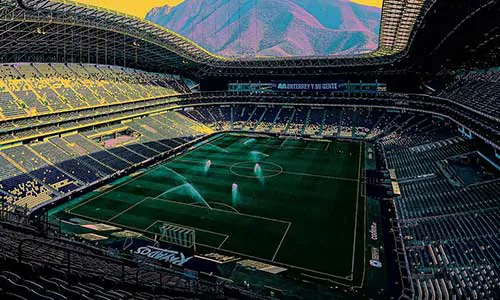
Known locally as “El Gigante de Acero” (The Steel Giant), Estadio Monterrey is one of the most visually stunning venues in the world. It is located in Guadalupe and holds 53,500 fans. The stadium features a sleek, metallic exterior and is famous for its panoramic view of the Cerro de la Silla mountain through the open end of the bowl.
The stadium is highly modern, having opened in 2015. It features excellent amenities, including rapid Wi-Fi connectivity and high-end hospitality areas, making it a favorite for traveling supporters who appreciate both aesthetics and comfort.
Estadio Guadalajara (Estadio Akron)
Located in Zapopan near Guadalajara, this stadium is the home of the beloved Club Deportivo Guadalajara (Chivas). It features a distinct exterior designed to resemble a volcano, topped by a white canopy that looks like a cloud. The stadium has a capacity of 46,355.
In addition to its beautiful architecture, the stadium uses eco-friendly systems. This includes rainwater harvesting and energy-efficient LED lighting, aligning with the sustainability standards set for the FIFA World Cup 2026.
Canada Host Stadiums
Canada will co-host the men’s tournament for the first time in history, selecting two venues that represent the country’s vibrant, multicultural urban hubs.
BC Place Vancouver
Located on the edge of False Creek in Vancouver, BC Place is famous for its cable-supported retractable roof and massive suspended video board. It holds 48,821 fans and has hosted major historical events, including the 2010 Winter Olympics and the 2015 FIFA Women’s World Cup Final.
Because Vancouver has a mild summer climate, it will provide some of the most comfortable playing conditions for the athletes. The stadium is highly integrated into Vancouver’s transit system, allowing fans to walk directly from Skytrain stations to their seats.
Toronto Stadium (BMO Field)
Toronto Stadium is a boutique, soccer-specific stadium located at Exhibition Place. It is the home of Toronto FC (MLS) and the Toronto Argonauts (CFL). For the FIFA World Cup 2026, the stadium is undergoing a major expansion to increase its seating capacity to 45,000. This is achieved by installing temporary stands behind the end lines.
Although it is the smallest venue in the tournament, its intimate design brings fans close to the action. This creates an intense and personal matchday experience. Fans can easily access the stadium via the GO Transit rail network, making commutes from the downtown core highly efficient. For more ideas on what to do when you arrive, check out our comprehensive travel guide for the host cities.
Pitch Upgrades and Modernization Projects
A major operational challenge for the FIFA World Cup 2026 is the playing surface. Several of the selected stadiums in the United States and Canada utilize artificial turf for NFL and MLS matches. However, FIFA strictly mandates that all World Cup matches must be played on natural grass surfaces.
Consequently, stadiums like Mercedes-Benz Stadium (Atlanta), SoFi Stadium (Los Angeles), Gillette Stadium (Boston), and Lumen Field (Seattle) are installing temporary, highly engineered natural grass pitches. These pitches are grown off-site and laid over the existing artificial turf using advanced irrigation and aeration techniques. This ensures the grass remains healthy and playable throughout the intense tournament schedule.
Furthermore, several stadiums are expanding the physical width of their field areas. NFL fields are narrower than standard international soccer pitches. Therefore, corners are being excavated, and lower-level seating sections are being temporarily modified to accommodate the wider pitches while preserving sightlines for fans in the front rows.
Frequently Asked Questions (FAQ)
How many stadiums are hosting matches in the FIFA World Cup 2026?
A total of 16 stadiums across three host countries will host matches. There are 11 venues in the United States, 3 in Mexico, and 2 in Canada. This is the highest number of host venues for a World Cup since the 2002 tournament in South Korea and Japan.
Which stadium is hosting the FIFA World Cup 2026 final?
The final match of the FIFA World Cup 2026 will be hosted at New York New Jersey Stadium (MetLife Stadium) on July 19, 2026. This open-air venue is situated in East Rutherford, New Jersey, and features a capacity of 82,500.
Are there new stadiums built specifically for the FIFA World Cup 2026?
No new stadiums were built specifically for this tournament. Instead, the host nations are utilizing existing world-class NFL, MLS, and historic Mexican stadiums. However, many of these venues are undergoing major renovations and upgrades to meet FIFA’s strict requirements.
Will all stadiums use natural grass fields?
Yes. Although several US and Canadian stadiums normally use artificial turf, FIFA requires all matches to be played on natural grass. These stadiums are installing temporary natural grass surfaces designed to withstand the physical demands of the tournament.
Why are some stadiums using different names during the tournament?
FIFA policies do not permit corporate sponsor names on stadiums unless those companies are official FIFA sponsors. As a result, venues like MetLife Stadium, SoFi Stadium, and Gillette Stadium are using generic tournament names, such as New York New Jersey Stadium, Los Angeles Stadium, and Boston Stadium.
How can I get tickets for matches at these stadiums?
Tickets are distributed officially through the FIFA ticket portal. Fans can register their interest early to receive updates on ticket draws, pricing structures, and hospitality packages as the tournament draws closer.
Conclusion
The FIFA World Cup 2026 will showcase a spectacular array of stadiums across North America. From the historic pitch of Estadio Azteca in Mexico City to the cutting-edge design of SoFi Stadium in Los Angeles, each venue is preparing to deliver an unforgettable experience for teams and fans alike.
Understanding the locations, capacities, and unique characteristics of these arenas is the first step toward enjoying this historic tournament. Be sure to check updates on the Official FIFA World Cup website for stadium rules, transit guidelines, and ticket information. Start planning your World Cup journey today to secure your place in football history!