FIFA World Cup 2026 Venues: Iconic Stadiums Hosting the Tournament
The global football community is preparing for a landmark event in sporting history. The FIFA World Cup 2026 is set to be the largest, most expansive edition of the tournament ever staged. For the first time, three North American nations—the United States, Mexico, and Canada—will jointly host the competition, which has expanded to feature 48 teams competing across 104 matches.
Consequently, sixteen world-class venues have been selected to accommodate this massive influx of international players and passionate fans. Each stadium brings its own distinct architectural marvel, historical weight, and local culture. This comprehensive guide explores these iconic arenas, analyzing how their designs and geographic locations will shape the tournament experience.
- 1. An Overview of the FIFA World Cup 2026 Expansion
- 2. United States Stadiums for the FIFA World Cup 2026
- 3. Iconic Host Stadiums in Mexico
- 4. Host Stadiums in Canada
- 5. Stadium Innovations and Sustainability in the FIFA World Cup 2026
- 6. Quick Comparison of All 16 Venues
- 7. How Venue Locations Impact Travel and Fan Experience
- 8. Frequently Asked Questions About the FIFA World Cup 2026
- 9. Conclusion & Call to Action
An Overview of the FIFA World Cup 2026 Expansion
In previous editions, a single host nation usually shouldered the responsibility of organizing the tournament. However, the sheer scale of the FIFA World Cup 2026 necessitates a collaborative approach. With forty-eight nations qualifying, the competition demands infrastructure capable of handling millions of traveling supporters.
The division of matches ensures that each host country gets a share of the football action. The United States will host the majority of the games, including the high-stakes knockout rounds and the final match. On the other hand, Mexico and Canada will host key group-stage fixtures and early knockout games, ensuring a continental celebration of the beautiful game.
To facilitate seamless operations, the 16 host cities are grouped into three main geographic regions: East, Central, and West. This logical division aims to minimize the travel distances for teams and fans alike, reducing fatigue and lowering the environmental impact of long-haul flights. Let us dive into the details of the stadiums in each host nation.
United States Stadiums for the FIFA World Cup 2026
The United States boasts eleven of the sixteen tournament venues. Many of these structures are primary homes to National Football League (NFL) franchises, featuring immense capacities, modern amenities, and advanced field technologies. Let us look at each of these major locations.
MetLife Stadium (New York/New Jersey)
Located in East Rutherford, New Jersey, just across the Hudson River from New York City, MetLife Stadium stands as one of the premier sports arenas in North America. As one of the focal points of the FIFA World Cup 2026, MetLife Stadium will host the highly anticipated final match of the tournament.
With a seating capacity of over 82,500, the stadium is fully open-air and offers a vast, multi-tiered seating bowl. Although it regularly uses artificial turf, the venue will install a temporary grass pitch specifically for the tournament. Its proximity to New York City makes it a global hub, positioned to welcome fans from all corners of the globe.
AT&T Stadium (Dallas)
Situated in Arlington, Texas, AT&T Stadium is widely recognized for its massive retractable roof and iconic center-hung high-definition video board. It is one of the largest enclosed stadiums in the world, capable of expanding its capacity to over 100,000 spectators for major events.
Furthermore, this venue is renowned for its high-tech amenities and luxurious club seating. Because it is a closed venue, it offers a climate-controlled environment, shielding fans and players from the intense Texas summer heat. This stadium’s state-of-the-art facilities make it a cornerstone of the FIFA World Cup 2026 schedule.
Mercedes-Benz Stadium (Atlanta)
Atlanta’s Mercedes-Benz Stadium is a marvel of contemporary sports architecture. Its most notable feature is the pinwheel-style retractable roof, which can open or close in less than ten minutes. In addition, the stadium features an enormous circular “halo” video board that spans the inner circumference of the roof.
To meet FIFA’s standards, a high-quality temporary natural grass system will be integrated into the stadium floor. This venue serves as a major transportation hub in the southeastern United States, ensuring easy access for domestic and international travelers alike during the group and knockout stages.
SoFi Stadium (Los Angeles)
Nestled in Inglewood, California, SoFi Stadium is one of the most technologically advanced sports venues ever constructed. Its wave-like canopy roof covers both the stadium and an adjacent performance venue, creating an indoor-outdoor feel.
Moreover, the stadium features the double-sided “Infinity Screen,” which provides crystal-clear replays to every seat. While its regular capacity is around 70,000, it can be expanded to accommodate more spectators. Fans visiting Southern California will experience a facility designed with modern premium seating and fan comfort in mind.
Lumen Field (Seattle)
Lumen Field is famously known as one of the loudest outdoor stadiums in North America due to its unique design, which features overhanging roofs that trap sound within the bowl. Located near downtown Seattle, this stadium offers views of the city skyline and Puget Sound.
The venue has a strong soccer tradition, serving as the home of the Seattle Sounders FC. The passionate local fan base is expected to turn Lumen Field into one of the most vibrant environments of the entire tournament, providing a true home-field advantage to teams playing in the Pacific Northwest.
Gillette Stadium (Boston)
Gillette Stadium, located in Foxborough, Massachusetts, is steeped in sporting history. Over the years, it has hosted numerous major MLS and international matches alongside its NFL duties. The stadium recently underwent a multi-million-dollar renovation, which included installing a massive outdoor video board and updating the iconic lighthouse structure.
Its location in the Northeast makes it a convenient stop for fans looking to travel between Boston and New York during the tournament. The open-air design offers a classic American sporting atmosphere that is highly appealing to traditional football enthusiasts.
NRG Stadium (Houston)
NRG Stadium was the first NFL facility to feature a retractable roof when it opened in 2002. This versatile arena is located in the heart of Houston, Texas, a city known for its diverse and passionate soccer-loving demographic. The venue is fully equipped to handle high temperatures, providing a comfortable indoor environment when the retractable roof is closed.
Consequently, players can perform at their peak without being hindered by the humid summer conditions of the Gulf Coast. The stadium’s surrounding complex offers ample space for fan festivals and community activations, adding to the tournament celebration.
Arrowhead Stadium (Kansas City)
Arrowhead Stadium is an open-air venue famed for its rich history and passionate supporters. It holds a Guinness World Record for the loudest crowd noise ever recorded in an outdoor stadium. Unlike many of the newer, multi-purpose domes, Arrowhead offers a classic, collegiate-style atmosphere that places fans close to the action.
Kansas City’s central location in the United States makes it a logical focal point for cross-country travelers during the tournament. The local community has fully embraced soccer over the past decade, ensuring that visiting nations will receive a warm and enthusiastic welcome.
Hard Rock Stadium (Miami)
Hard Rock Stadium in Miami Gardens, Florida, has hosted multiple Super Bowls, international soccer friendlies, and major tennis tournaments. It features an open-air canopy that covers 90% of the seating areas, protecting fans from sun and rain while keeping the playing field open to the elements.
Miami is a gateway to Latin America and the Caribbean, making this stadium a focal point for diverse fanbases. The vibrant local culture, combined with the stadium’s tropical backdrop, will undoubtedly add a unique energy to the matches hosted here.
Lincoln Financial Field (Philadelphia)
Lincoln Financial Field is located in the South Philadelphia Sports Complex. The stadium is known for its excellent sightlines and environmentally friendly operations, utilizing wind turbines and solar panels to generate clean energy. Philadelphia’s historic landmarks and rich sporting culture make it a fantastic destination for international visitors.
The stadium’s natural grass surface is highly regarded, ensuring a top-tier playing field for the competing nations. Its proximity to downtown Philadelphia allows fans to easily explore the city’s rich cultural heritage before and after matches.
Levi’s Stadium (San Francisco Bay Area)
Located in Santa Clara, California, Levi’s Stadium is a highly sustainable venue that has achieved multiple environmental certifications. It features a green roof planted with native species and utilizes reclaimed water for irrigation. Furthermore, the stadium is deeply integrated with the tech-focused culture of Silicon Valley, offering high-speed Wi-Fi and advanced mobile ticketing options.
Its location on the West Coast provides beautiful summer weather and easy access to Northern California’s tourist attractions. The modern architecture and open-air design will provide an exceptional viewing experience for football fans worldwide.
Iconic Host Stadiums in Mexico
Mexico holds a special place in football history, and its inclusion in the FIFA World Cup 2026 is highly symbolic. It will become the first nation to host matches in three separate World Cup editions, having previously hosted in 1970 and 1986. Let us explore the three Mexican venues selected for this historic tournament.
Estadio Azteca (Mexico City)
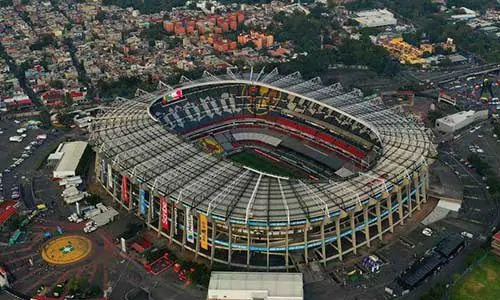
Estadio Azteca is a legendary cathedral of world football. It is the site where Diego Maradona scored his famous “Hand of God” and “Goal of the Century” goals in 1986, and where Pelé lifted the trophy in 1970. Estadio Azteca is a legendary cathedral of world football that will achieve unprecedented history during the FIFA World Cup 2026 by hosting the opening match on June 11, 2026.
With a capacity of over 83,000, the stadium is perched at an altitude of 2,200 meters above sea level, presenting a unique physical challenge for visiting teams. The stadium has undergone extensive modernizations to prepare for the tournament, balancing its historic soul with modern safety and comfort standards.
Estadio BBVA (Monterrey)
Often referred to as “The Steel Giant” due to its striking metallic exterior, Estadio BBVA in Monterrey is widely considered one of the most beautiful stadiums in the world. The stadium is famous for its breathtaking backdrop, with the iconic Cerro de la Silla mountain visible through the open end of the structure.
Opened in 2015, the venue features state-of-the-art facilities and close-up views of the pitch, offering an intimate yet electric atmosphere for spectators. The surrounding parklands provide an ideal setting for pre-match gatherings, reflecting the city’s deep passion for the sport.
Estadio Akron (Guadalajara)
Located in Zapopan, a municipality of Guadalajara, Estadio Akron is renowned for its innovative “volcano” design. The exterior of the stadium is covered in green grass, making it blend into the surrounding landscape, while the roof resembles a white cloud hovering above the crater.
As the home of the popular club Chivas, Guadalajara has a deep-rooted football culture. Estadio Akron’s modern facilities and eco-friendly features ensure a memorable experience for everyone visiting Western Mexico, showcasing the rich cultural heritage of Jalisco.
Host Stadiums in Canada
Canada is making its debut as a host nation for the men’s tournament, having previously hosted the highly successful 2015 FIFA Women’s World Cup. Two world-class stadiums in major metropolitan areas will represent Canada during the tournament, providing a welcoming environment for global visitors.
BC Place (Vancouver)
BC Place is a landmark venue in Vancouver, British Columbia, known for its massive cable-supported retractable roof. The stadium sits on the edge of False Creek, offering scenic views of the surrounding mountains and waterways. The venue has hosted major events, including the 2010 Winter Olympics and the 2015 Women’s World Cup Final.
For the tournament, BC Place will host seven matches, including key group-stage fixtures for the Canadian national team in the FIFA World Cup 2026. The stadium’s advanced infrastructure and proximity to the city center make it an ideal hub for visiting supporters who wish to explore Western Canada.
BMO Field (Toronto)
Located in Exhibition Place near downtown Toronto, BMO Field (officially referred to as Toronto Stadium for the tournament) is Canada’s premier soccer-specific stadium prepared for the FIFA World Cup 2026. To meet the capacity requirements for a major international tournament, the venue is undergoing a temporary expansion to increase its seating capacity to over 45,000.
Toronto’s multicultural demographic means that almost every competing nation will find a local fan base ready to support them, creating a global atmosphere inside the stadium. The venue’s intimate design keeps fans close to the action, creating an intense, focused matchday experience.
Stadium Innovations and Sustainability in the FIFA World Cup 2026
As sports architecture evolves, modern venues are no longer just places to watch a game; they are hubs of technological innovation and ecological sustainability. The stadiums selected for the FIFA World Cup 2026 reflect this paradigm shift, setting new standards for green operations in major sporting events.
First, environmental sustainability is a major priority for the organizers. Several venues, such as Levi’s Stadium and Lincoln Financial Field, utilize advanced solar arrays, wind turbines, and water recycling systems to minimize their carbon footprint. These efforts align with global initiatives to reduce the ecological impact of mega-events.
Second, turf management has reached unprecedented heights. Many US stadiums that traditionally use synthetic turf are installing sophisticated temporary natural grass surfaces. These temporary pitches must meet strict FIFA regulations, which require advanced drainage systems, grow lights, and specific grass varieties that can withstand intense gameplay.
Lastly, digital fan experiences are being redefined. High-speed Wi-Fi, mobile ordering systems, and immersive augmented reality displays are standard features across these arenas, ensuring fans remain connected throughout their visit. These technological upgrades aim to reduce wait times and improve the overall flow of spectators.
Quick Comparison of All 16 Venues
To help fans visualize the tournament landscape, here is a breakdown of the sixteen iconic stadiums hosting the matches:
| Host City | Stadium Name | Country | Approx. Capacity | Key Feature |
|---|---|---|---|---|
| New York / New Jersey | MetLife Stadium | United States | 82,500+ | Host of the Final Match |
| Dallas | AT&T Stadium | United States | 80,000 – 100,000 | Retractable Roof & Giant Screen |
| Atlanta | Mercedes-Benz Stadium | United States | 71,000+ | Pinwheel Retractable Roof |
| Los Angeles | SoFi Stadium | United States | 70,000+ | Futuristic Canopy Design |
| Seattle | Lumen Field | United States | 69,000 | Loud Acoustic Architecture |
| Boston | Gillette Stadium | United States | 65,800 | Historic Sporting Venue |
| Houston | NRG Stadium | United States | 72,200 | Retractable Roof System |
| Kansas City | Arrowhead Stadium | United States | 76,400 | Classic Open-Air Stadium |
| Miami | Hard Rock Stadium | United States | 64,700 | Partial Open-Air Canopy |
| Philadelphia | Lincoln Financial Field | United States | 69,700 | Eco-Friendly Solar & Wind |
| San Francisco | Levi’s Stadium | United States | 68,500 | Green Roof Technology |
| Mexico City | Estadio Azteca | Mexico | 83,200 | Opening Match Host & Historic Site |
| Monterrey | Estadio BBVA | Mexico | 51,000 | Mountain View Backdrop |
| Guadalajara | Estadio Akron | Mexico | 48,000 | Volcanic Slopes Architecture |
| Vancouver | BC Place | Canada | 54,500 | Retractable Roof on Waterfront |
| Toronto | BMO Field | Canada | 45,000 | Intimate Soccer Stadium |
How Venue Locations Impact Travel and Fan Experience
The vast geographical footprint of the FIFA World Cup 2026 introduces both opportunities and challenges. Because matches are spread across three massive countries, planning a trip requires careful logistics. Supporters must navigate various time zones, transport networks, and weather conditions during the tournament.
For example, traveling from the cool, coastal environment of Vancouver to the high-altitude, warm climate of Mexico City requires preparation. Differences in temperature and altitude will affect how players perform and how fans adapt to their surroundings.
To mitigate travel fatigue, FIFA has regionalized the tournament’s group stages. This means teams will primarily play their early matches within a specific cluster (East, Central, or West). This approach is designed to keep travel times manageable and maintain competitive balance on the field.
Frequently Asked Questions About the FIFA World Cup 2026
What is the official start date of the FIFA World Cup 2026?
The tournament is officially scheduled to begin on June 11, 2026, with the opening match of the FIFA World Cup 2026 taking place at the historic Estadio Azteca in Mexico City. The final is scheduled for July 19, 2026.
Which stadium is hosting the final of the FIFA World Cup 2026?
MetLife Stadium in East Rutherford, New Jersey (representing the New York/New Jersey host city), will host the final match of the FIFA World Cup 2026 on July 19, 2026.
How many teams will compete in this edition of the tournament?
A total of 48 teams will compete in the FIFA World Cup 2026, which is an expansion from the traditional 32-team format. This expansion allows more nations from around the world to participate in the global event.
How can fans buy tickets for the matches?
Tickets are distributed through the official FIFA ticketing portal. Fans are encouraged to register their interest early to receive updates on ticket draws, pricing, and hospitality packages. You can learn more about tickets and schedule details on the official FIFA website.
Are all the stadiums using natural grass pitches?
Yes, FIFA regulations require all matches to be played on high-quality natural grass. Stadiums that regularly feature artificial turf are installing specialized temporary grass surfaces to meet these strict standards.
What are the three geographical regions for the venues?
The host cities are divided into three regions: West (Vancouver, Seattle, San Francisco, Los Angeles, Guadalajara), Central (Kansas City, Dallas, Houston, Atlanta, Monterrey, Mexico City), and East (Toronto, Boston, New York/New Jersey, Philadelphia, Miami).
Conclusion & Call to Action
The FIFA World Cup 2026 is set to deliver an unprecedented spectacle, matching the spirit of unity and sportsmanship with modern engineering. From the historic altitude of Estadio Azteca to the futuristic dome of SoFi Stadium, these sixteen venues will write the next chapter of football history.
Whether you are planning to travel to the matches or watch from home, understanding the unique features of these stadiums adds a deeper appreciation for the tournament. Start planning your journey early, register for tickets, and prepare to witness history in the making.
Which stadium are you most excited to visit? Let us know in the comments below, and share this guide with your fellow football fans! For more insights on stadiums, feel free to visit the StadiumDB tournament database.